In this project, I have avoided trying to replicate work that has already been done. Pre-1996 one of the most important events to occur regarding first-generation and low-income student enrollment was the 1969 sit-in by SASS (Swarthmore Afro-American Student Society). You can read more about this project here. An important part of understanding FLI history is the document “ Swarthmore College: An Informal History” , the inspiration for this website’s name. Of note is that in 1968, the admissions office sent a copy of its admissions report to black students that contained detailed information on Black students’ SAT scores, grades earned at Swarthmore, family incomes and occupations, and academic standing , including probation and required withdrawal information – a major violation of the students’ privacy. This was a one of many motivating factors for students to occupy the admissions office. As a result of the protests, black admissions officers and counselors were hired, the BCC was established, and the Black Studies program began to become formalized.
An image of the Black Cultural Center (BCC) in 1970
Financial Aid 1957-1981
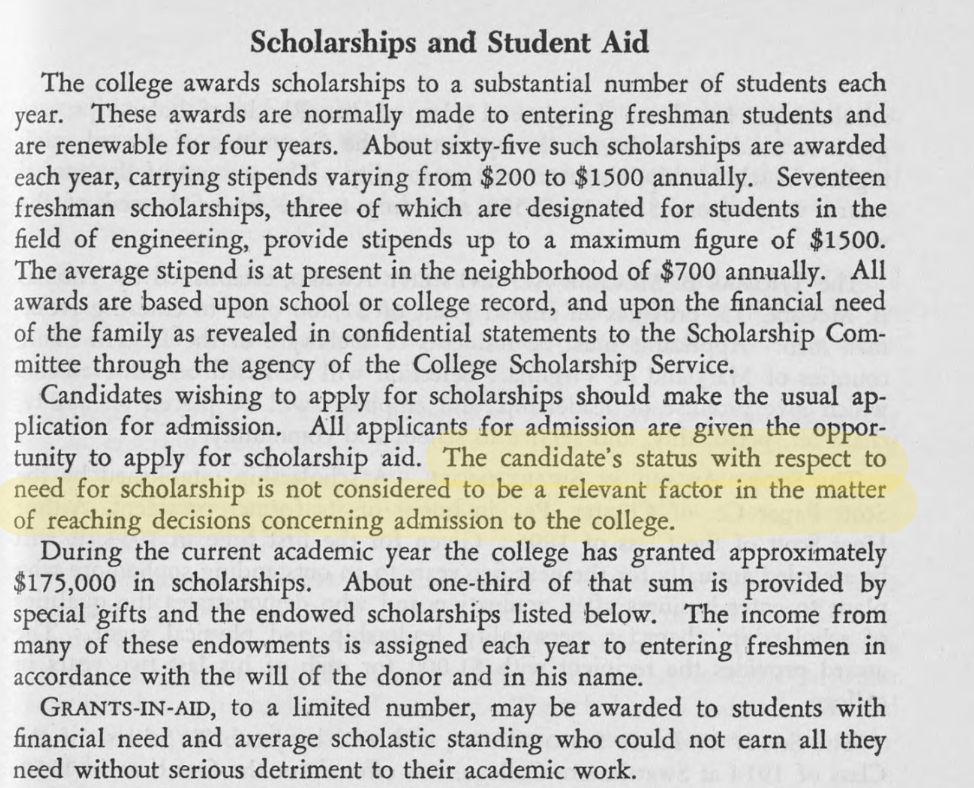
Swarthmore College has been committed to need-blind admissions since at least 1957. College bulletins from that era included language stating that a candidate’s financial need was not a relevant factor in admission decisions.
In the fall of 1981, Swarthmore made another significant development in financial aid by limiting the loan component to a maximum of $1,000 for low-income students.
The VEERY
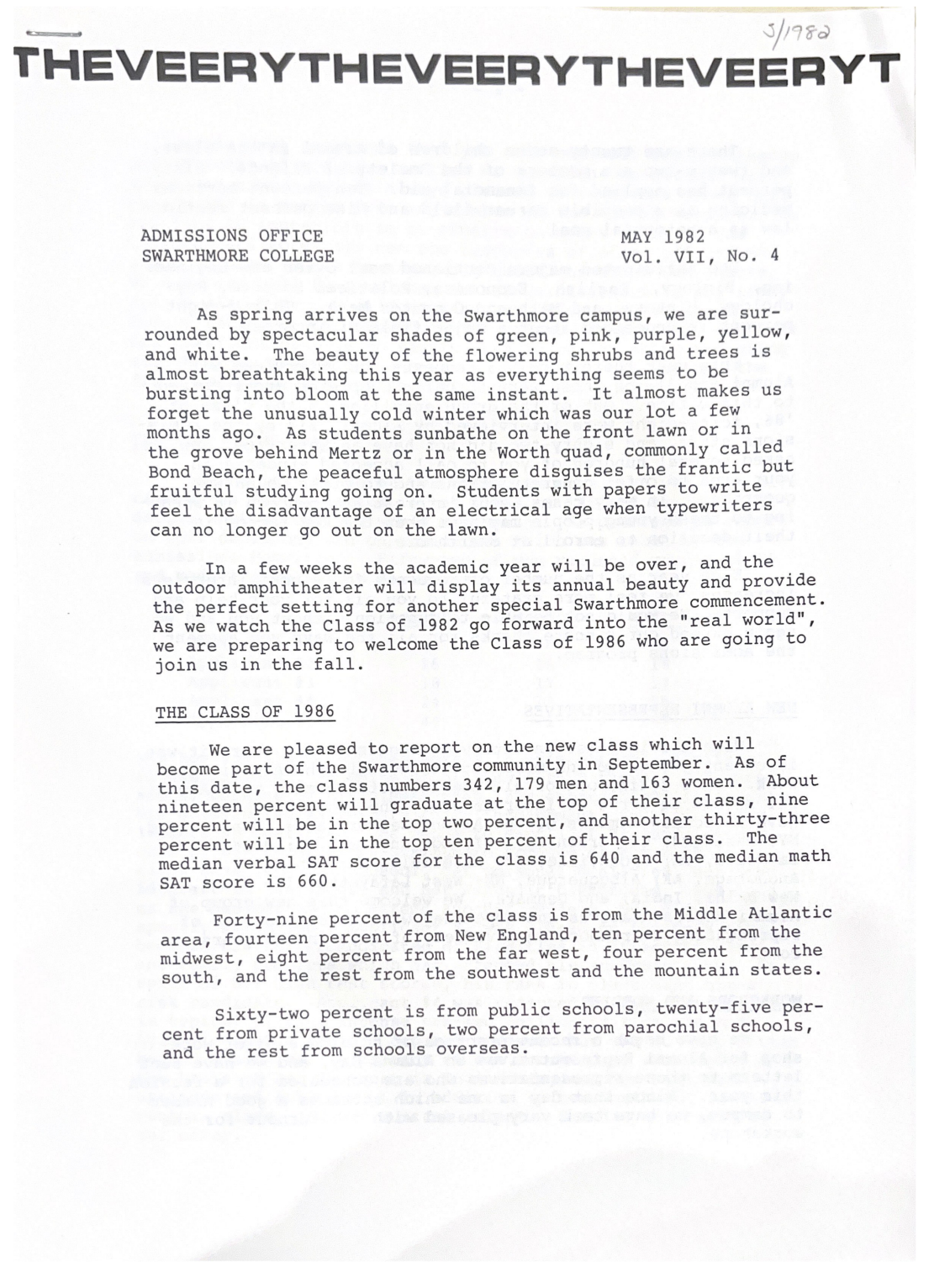
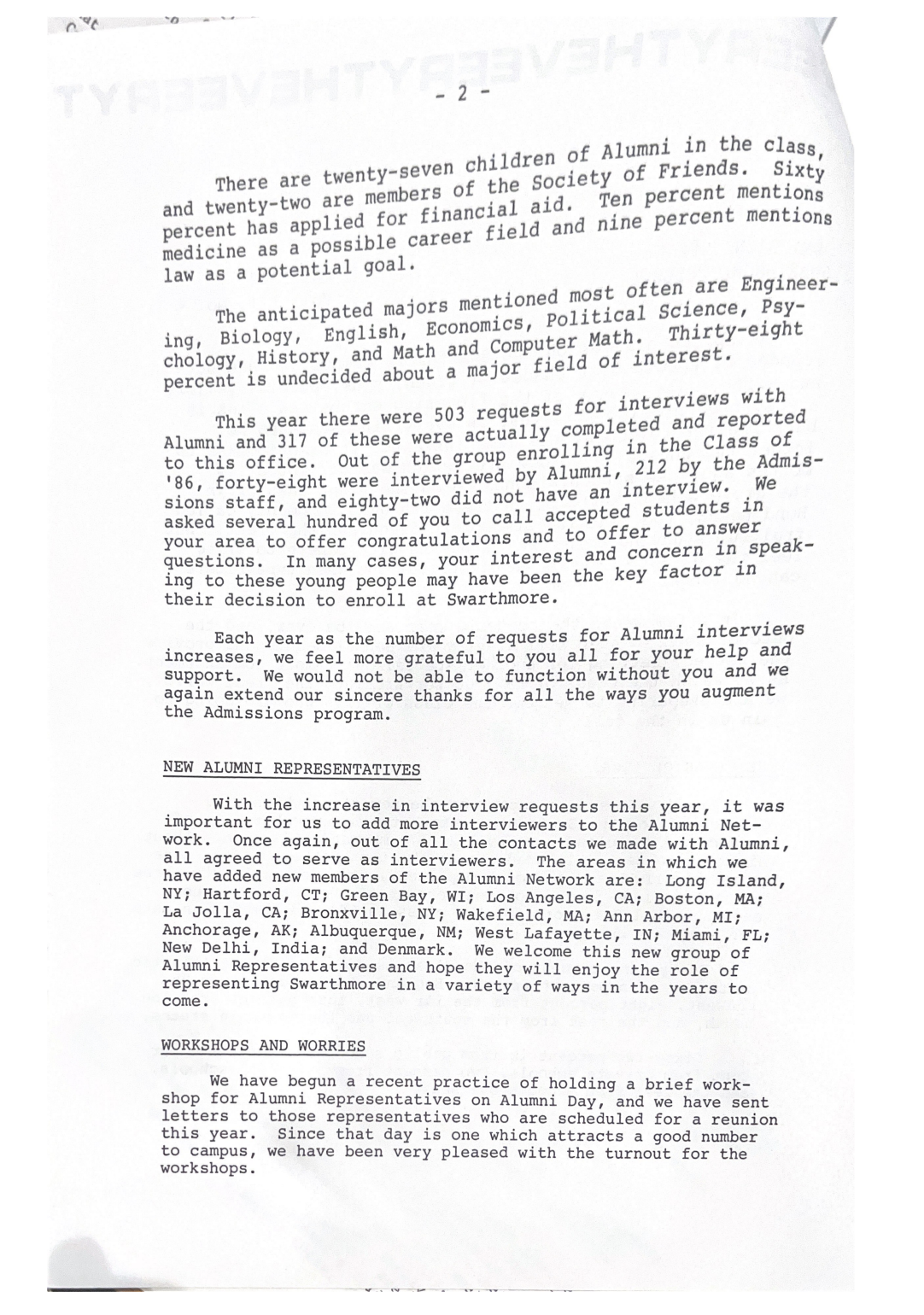
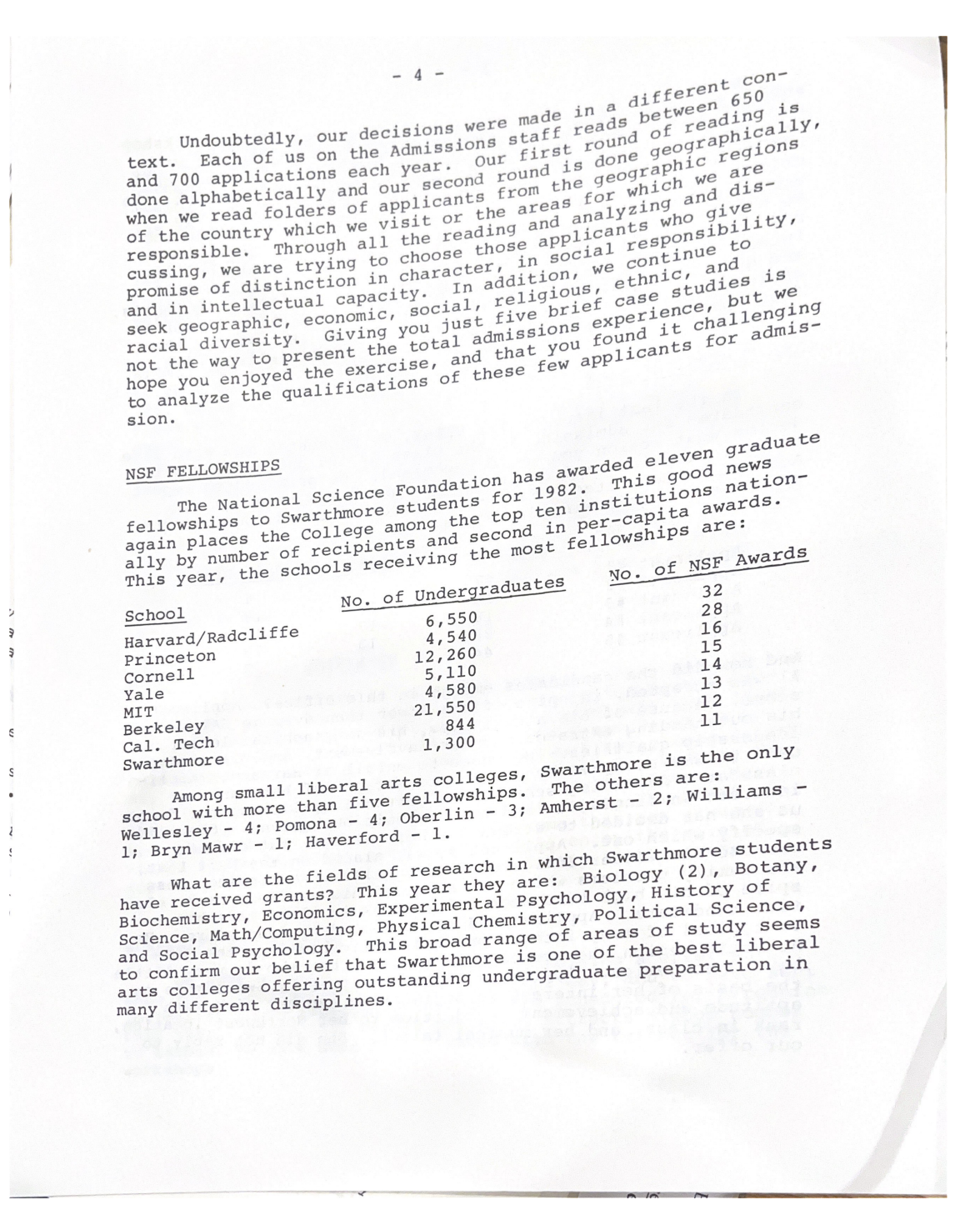
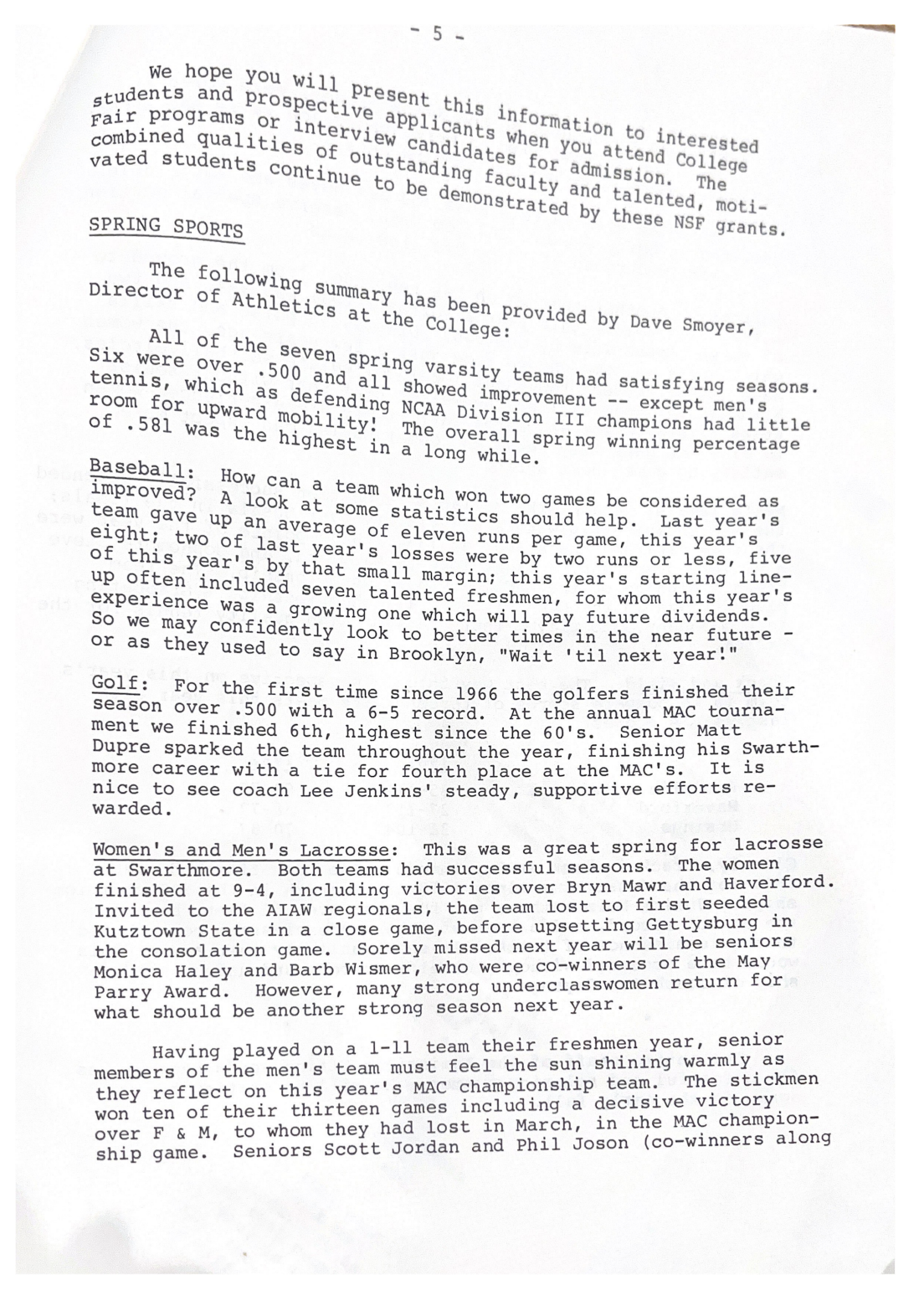
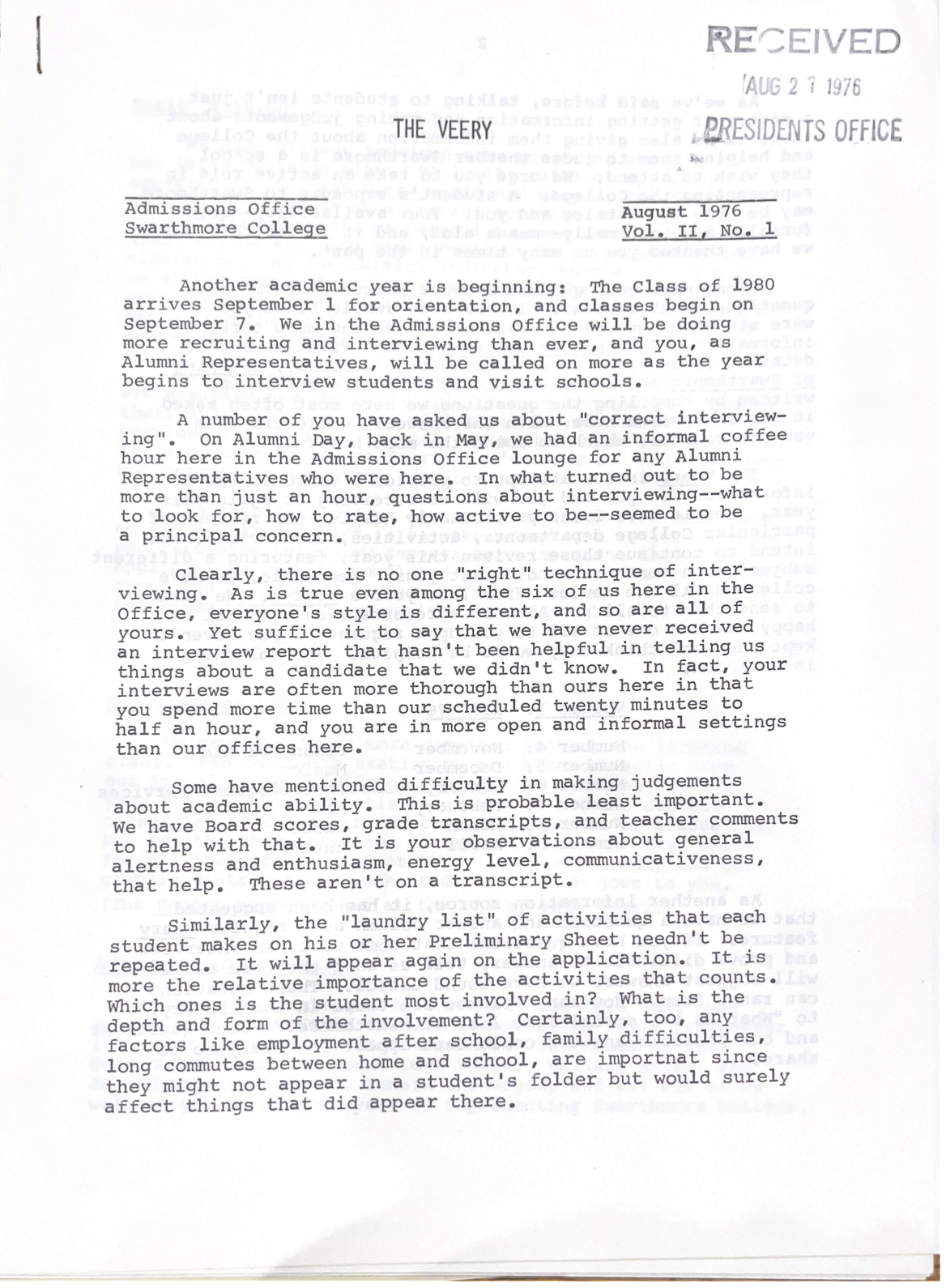
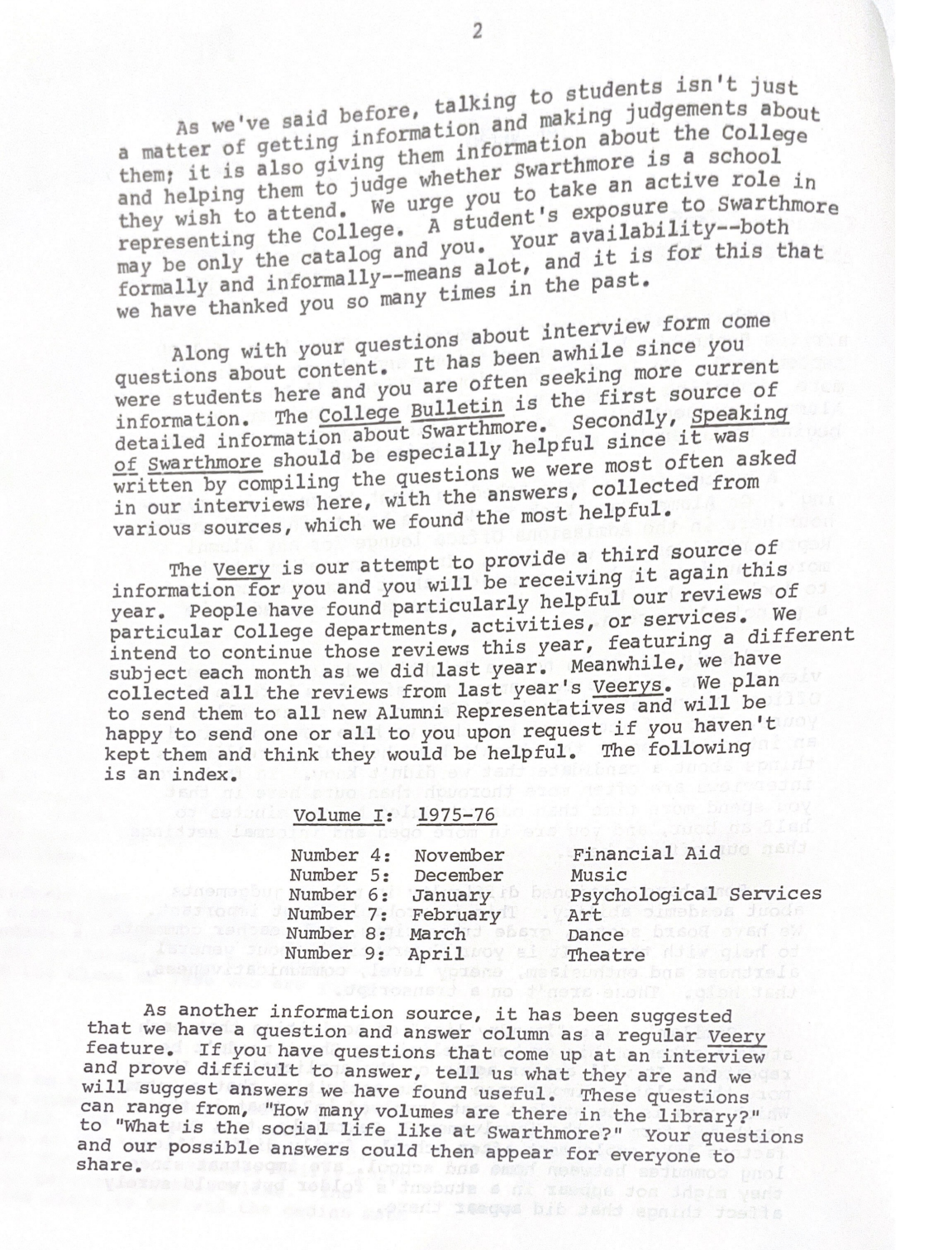
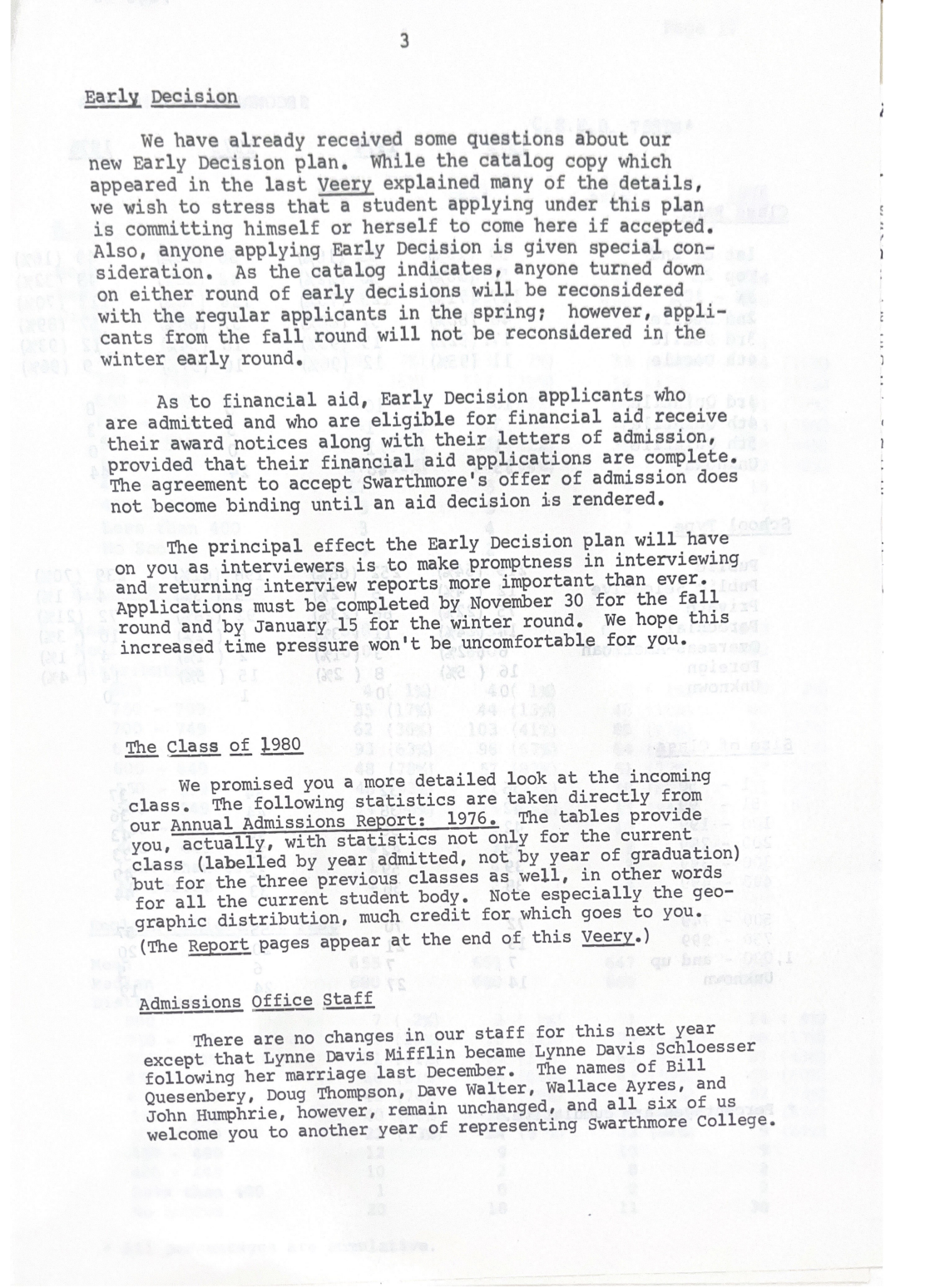
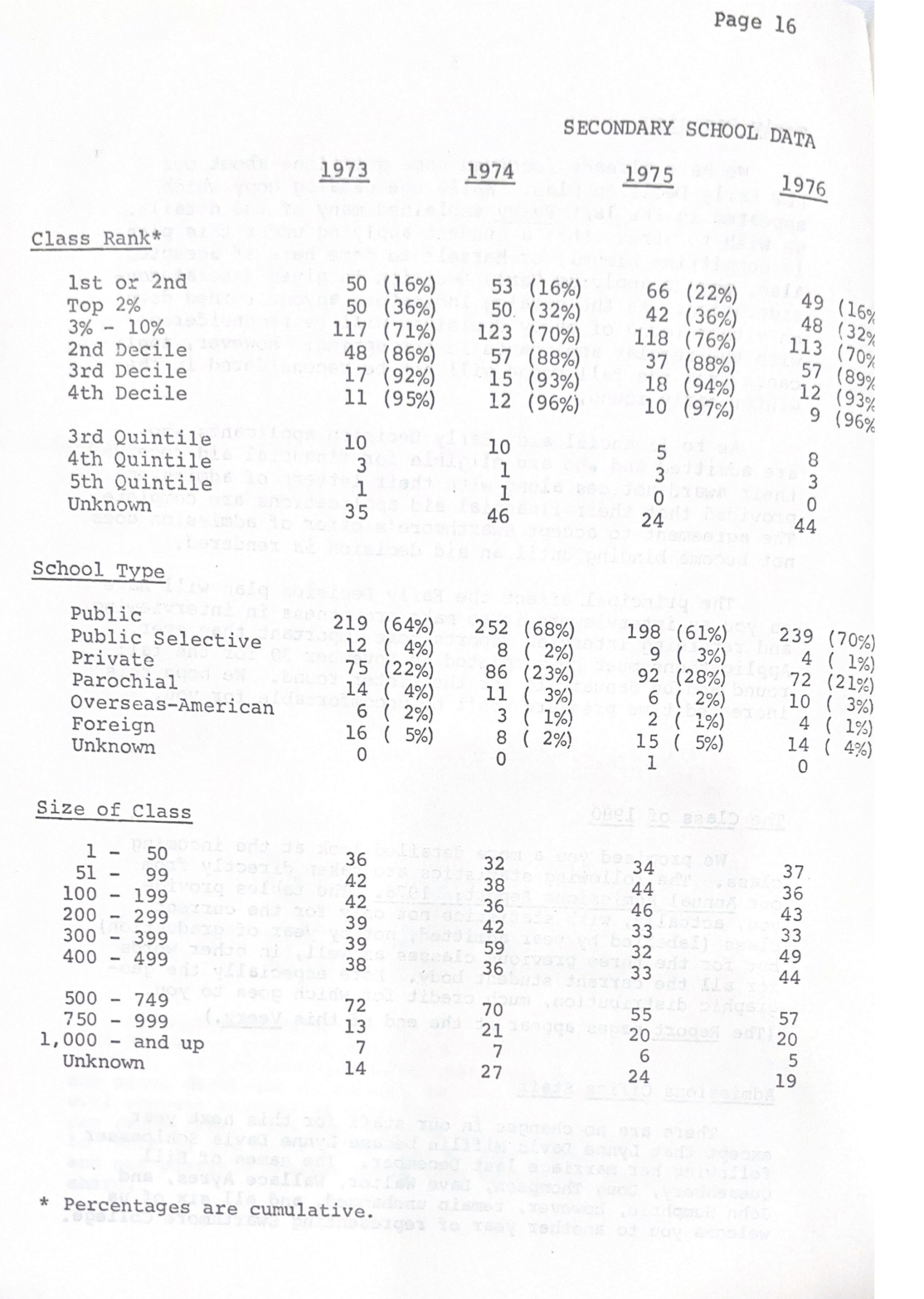
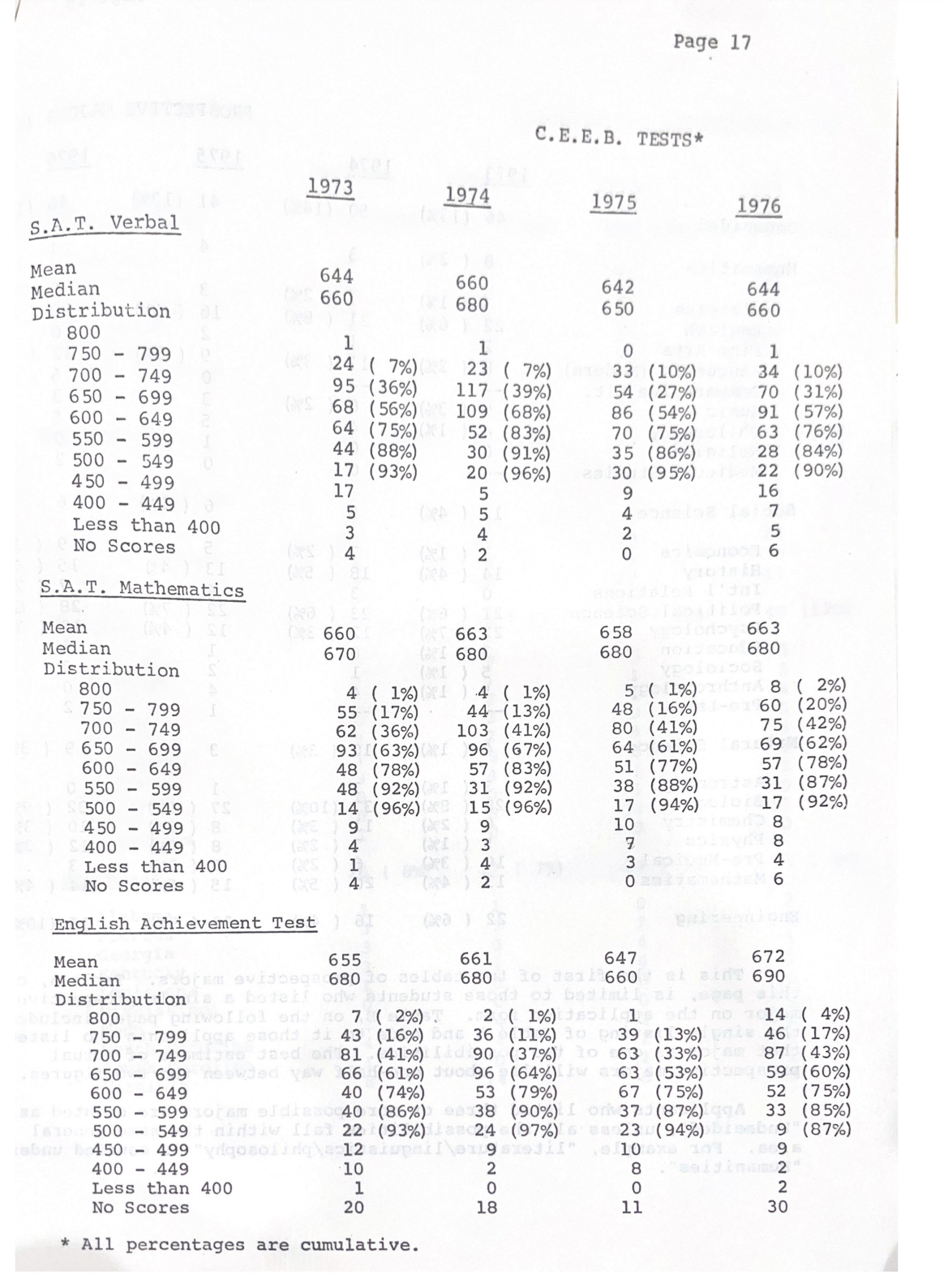
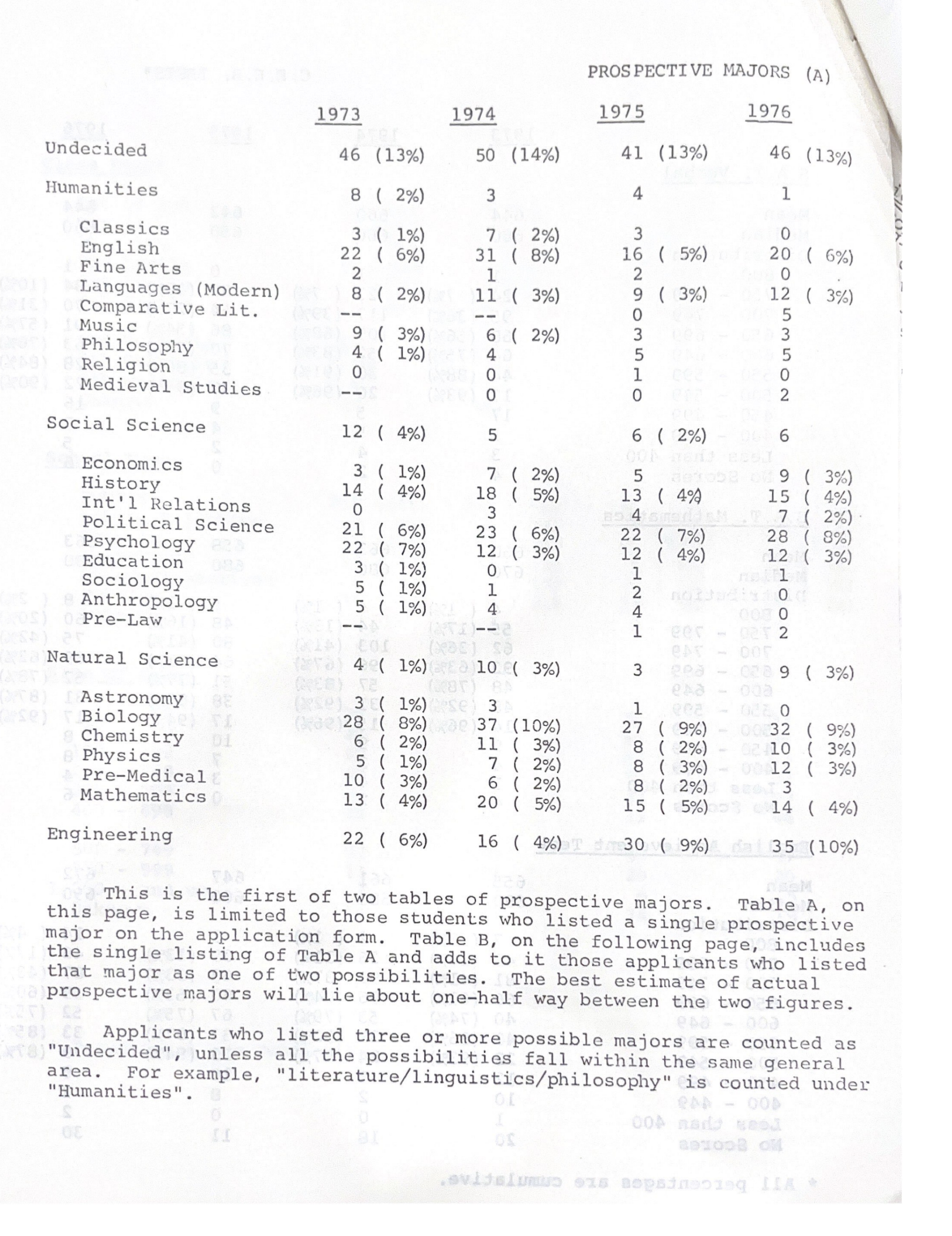
During the 1970s, Swarthmore College’s admissions office began publishing an alumni publication called “THE VEERY.” Only two copies remain today, one from 1976 and another from 1982. These publications served as a resource for alumni to stay informed about current information on the college, which could be useful during their interviews with prospective students.
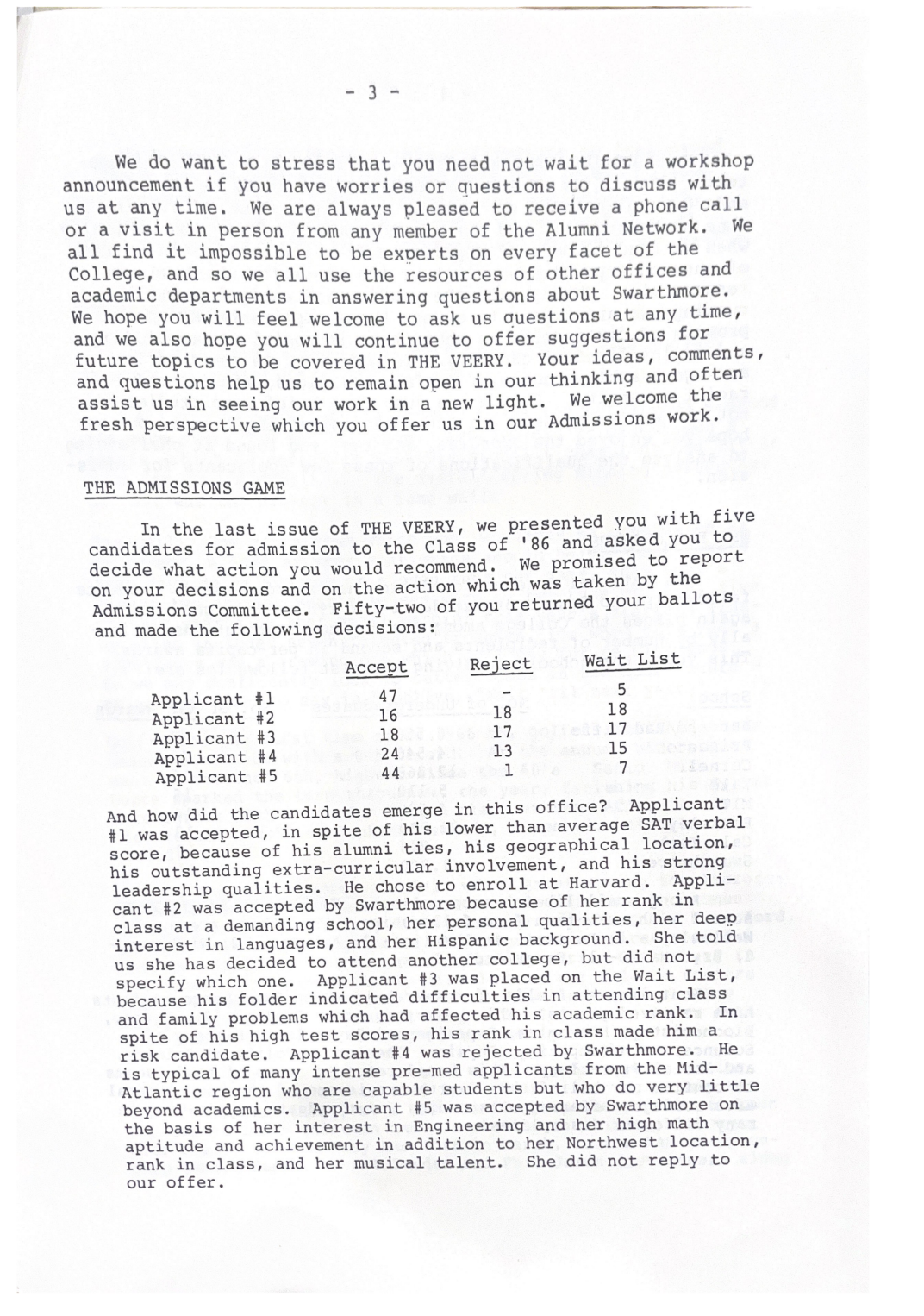
The 1982 edition of “THE VEERY” contains a section called “The Admissions Game,” which sheds light on how alumni viewed and ranked prospective students. Notably, the language used by Swarthmore to describe some applicants is concerning, with references to issues such as “difficulties attending class” and “family problems that affected class rank.”
Experiences with Financial Aid Office
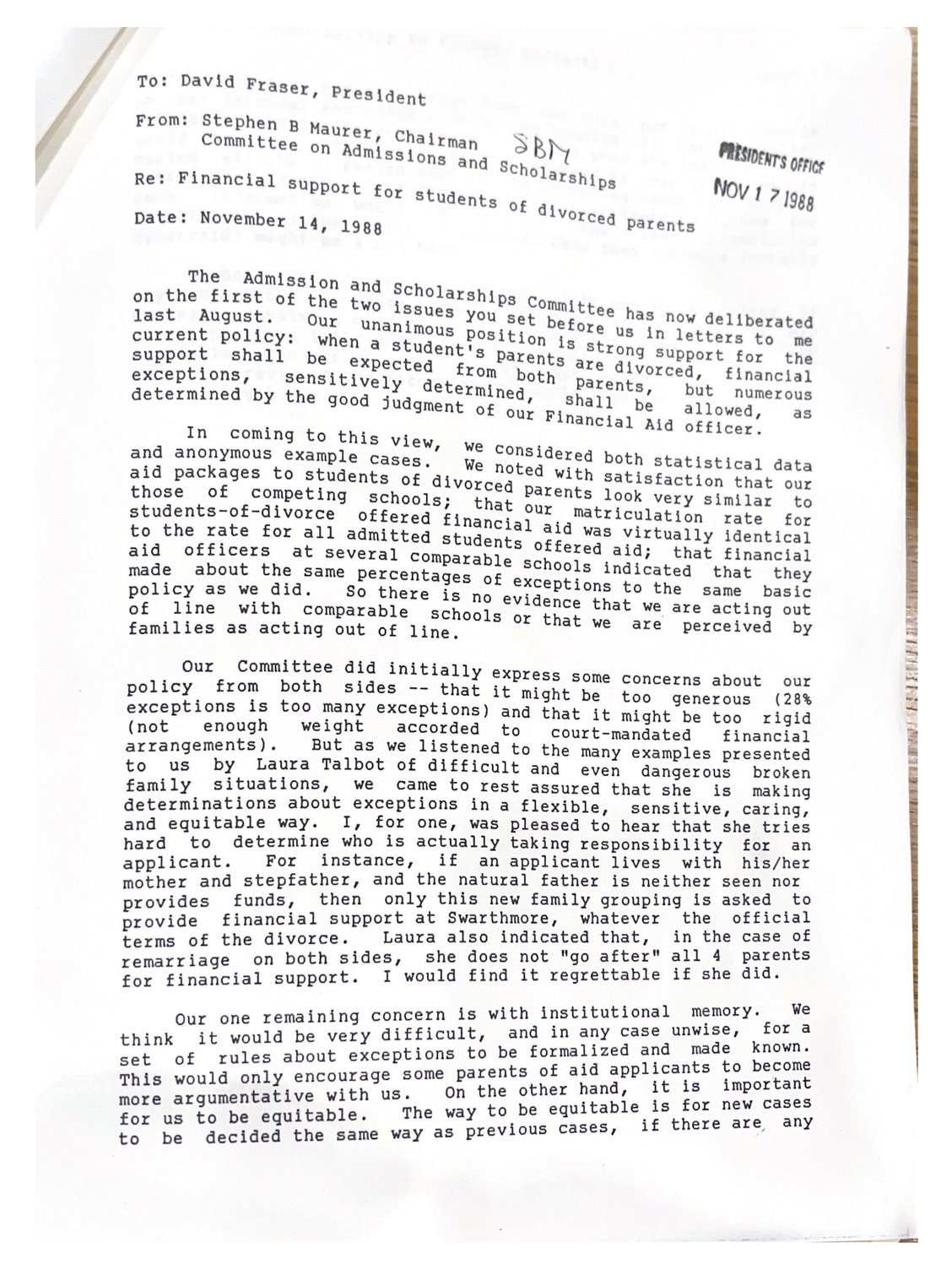
In the 1980’s the college did not consider different family relationships, such as divorced or single-parent households, when determining financial aid eligibility. I was unable to find out whether this policy has changed since then.
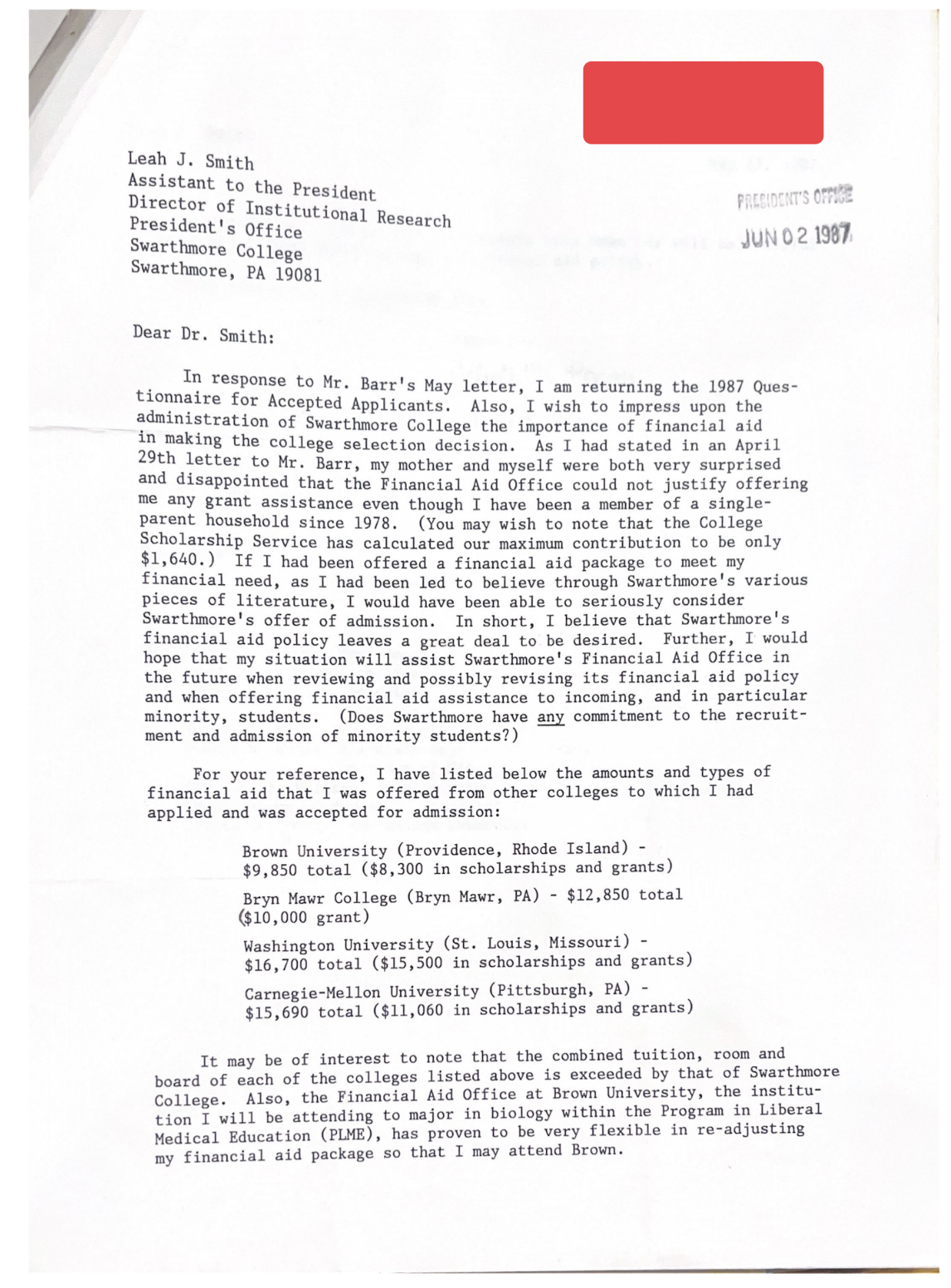
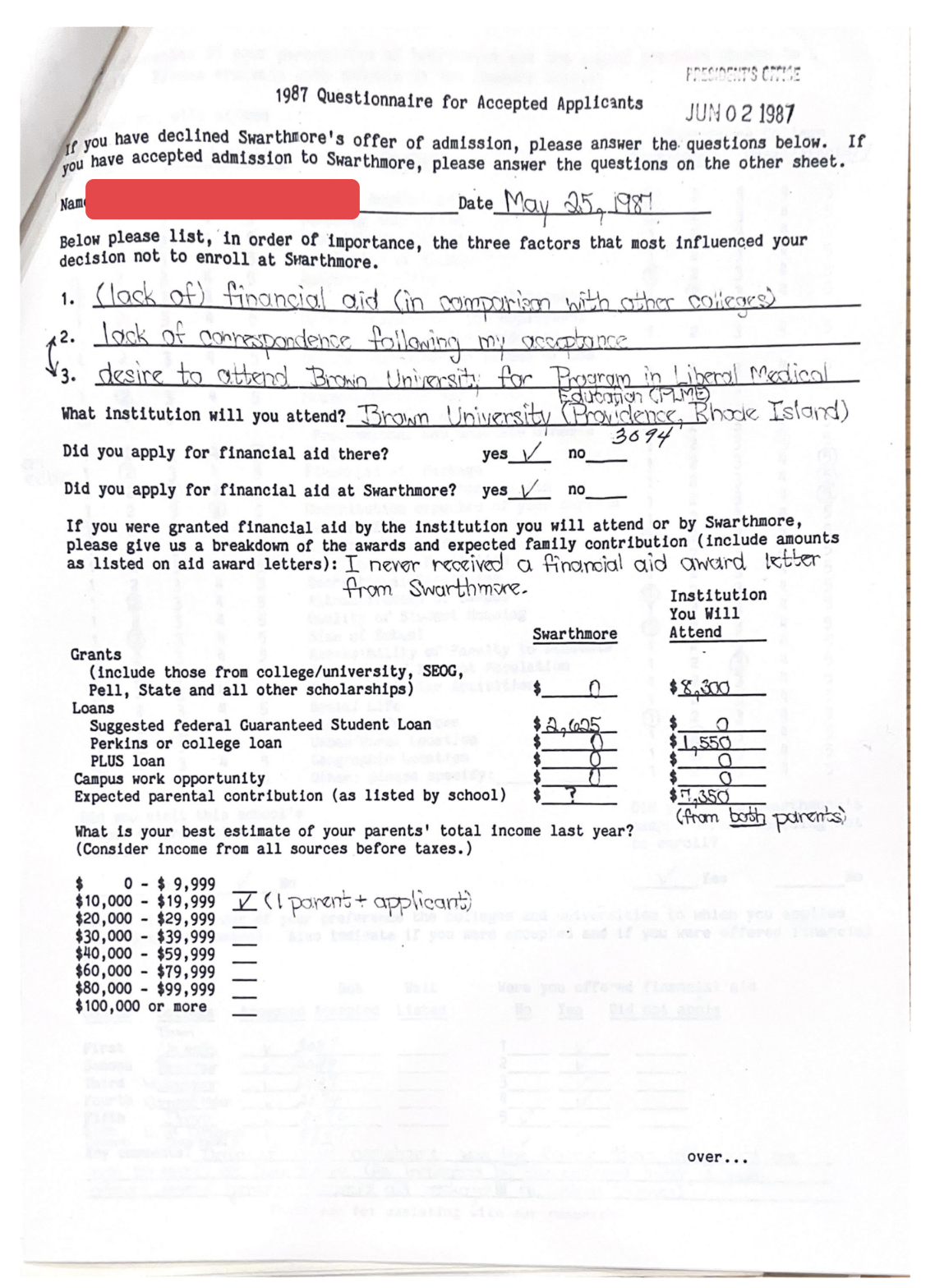
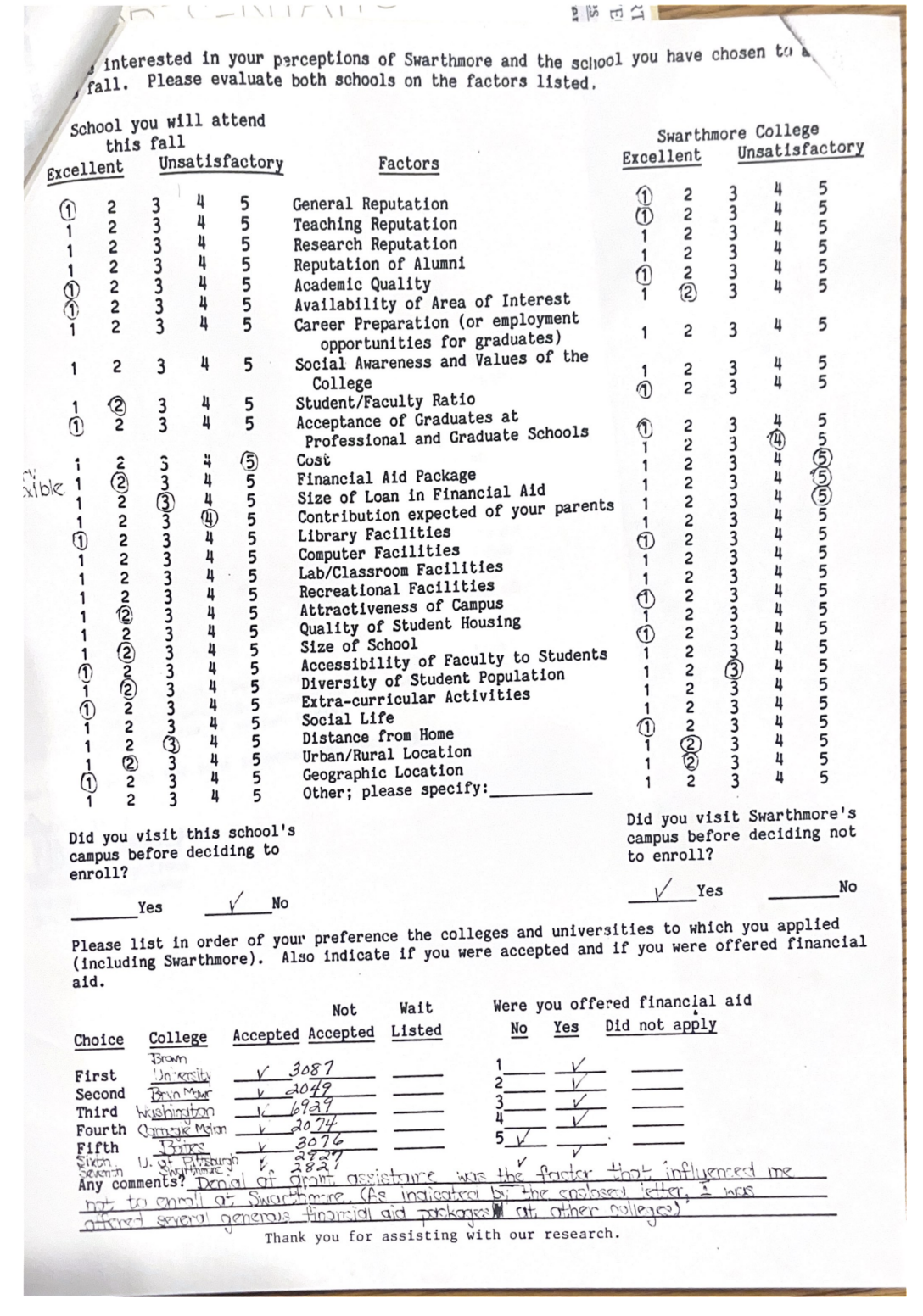
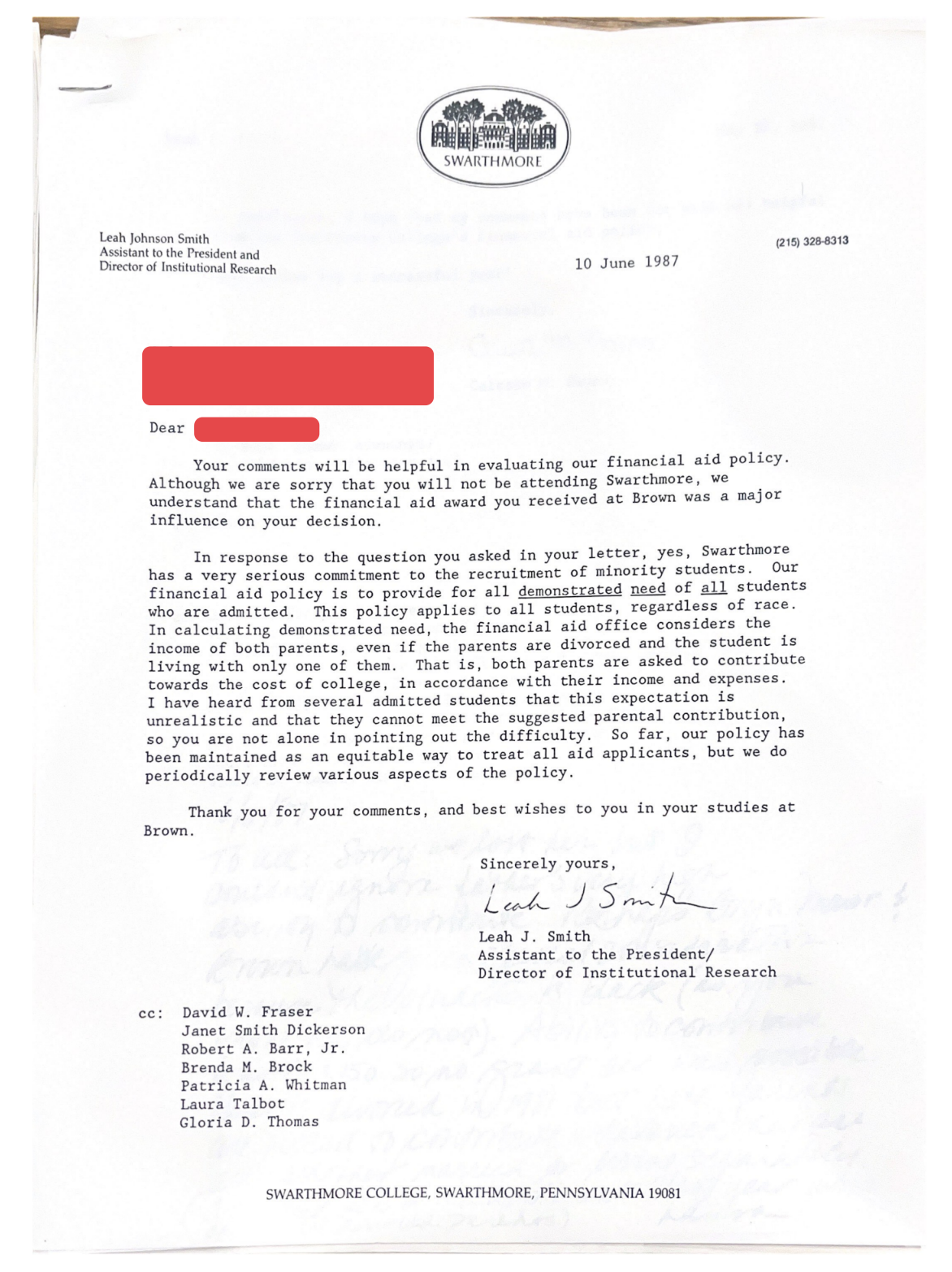
In 1987, a student expressed disappointment in a letter to Laura Talbot, the director of financial aid at the time. Despite having an estimated maximum contribution of $1,640 ($4,361 when adjusted for inflation), the student did not receive any grant assistance in their financial aid offer. The student shared the financial aid they received at other institutions, hoping that Swarthmore would adjust its policy in the future.
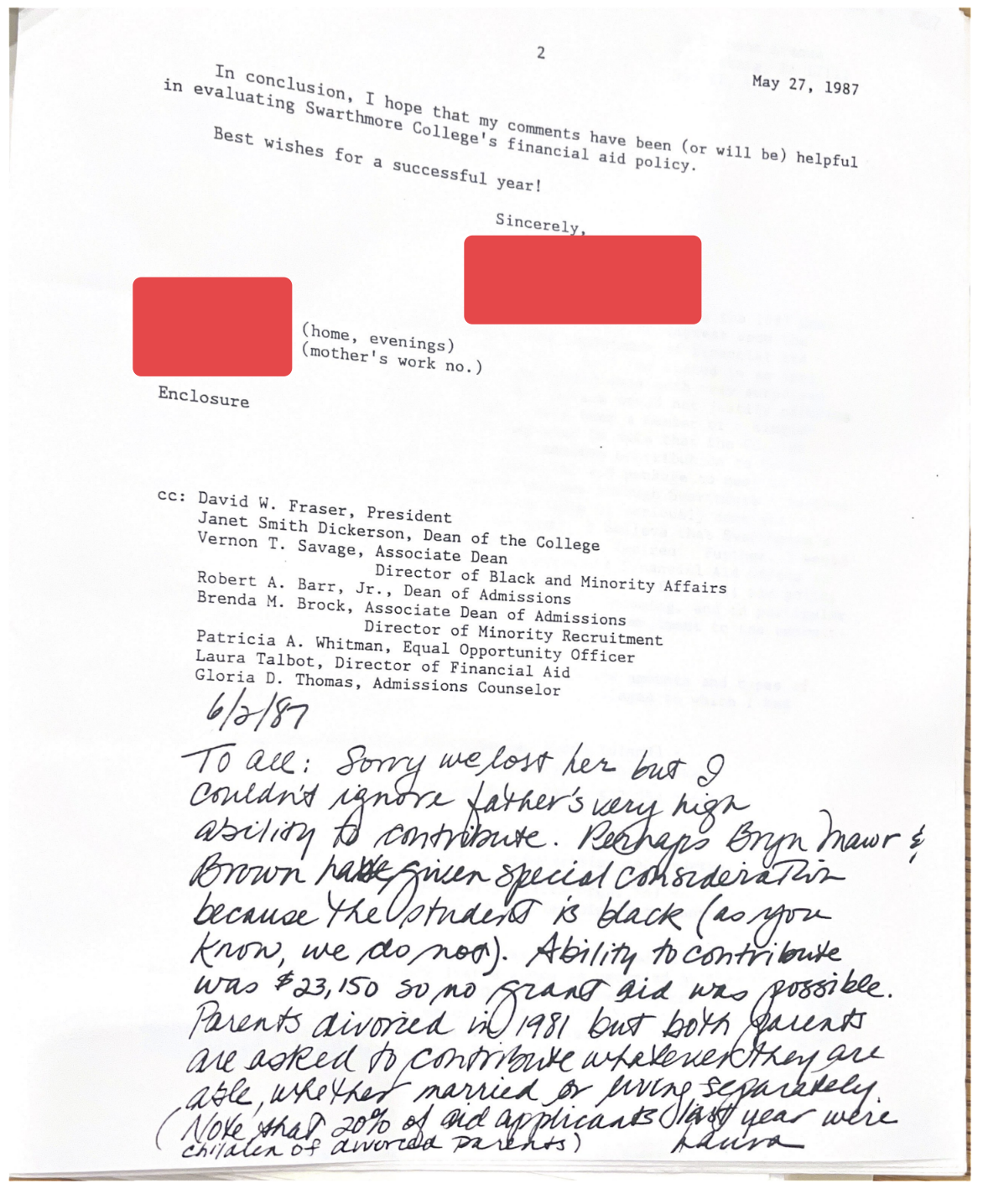
In a note to various administrators, Laura Talbot wrote
“To All: Sorry we lost her but I couldn’t ignore fathers very high ability to contribute. Perhaps Bryn Mawr and Brown have given special consideration because the student is black ( as you know, we do not). Ability to contribute was $23,150 so no grant aid was possible. Parents divorced in 1981 but both parents are asked to contribute whatever they are able, whether married or living separately. (Note that 20% of aid applicants last year were children of divorced parents.) – Laura “
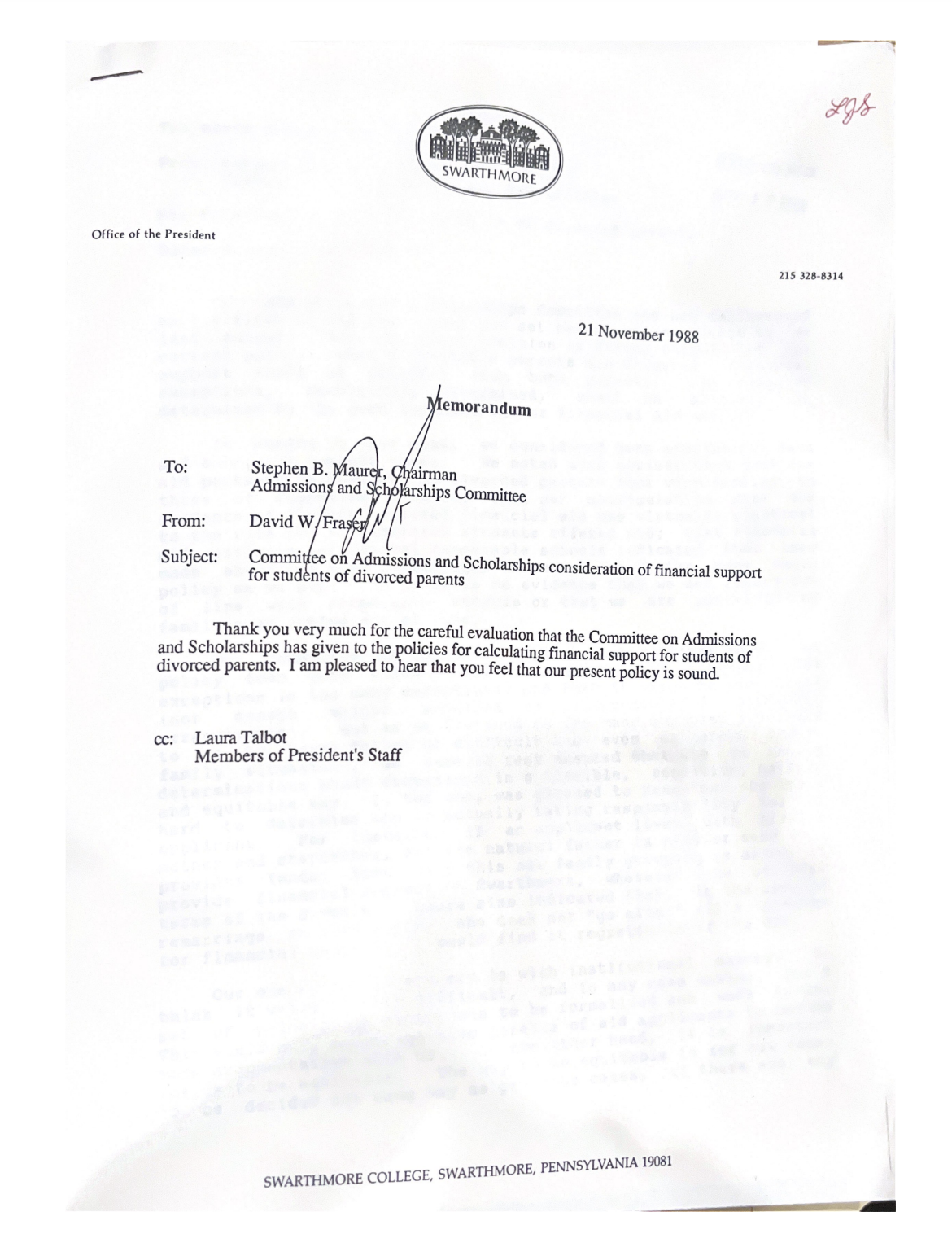
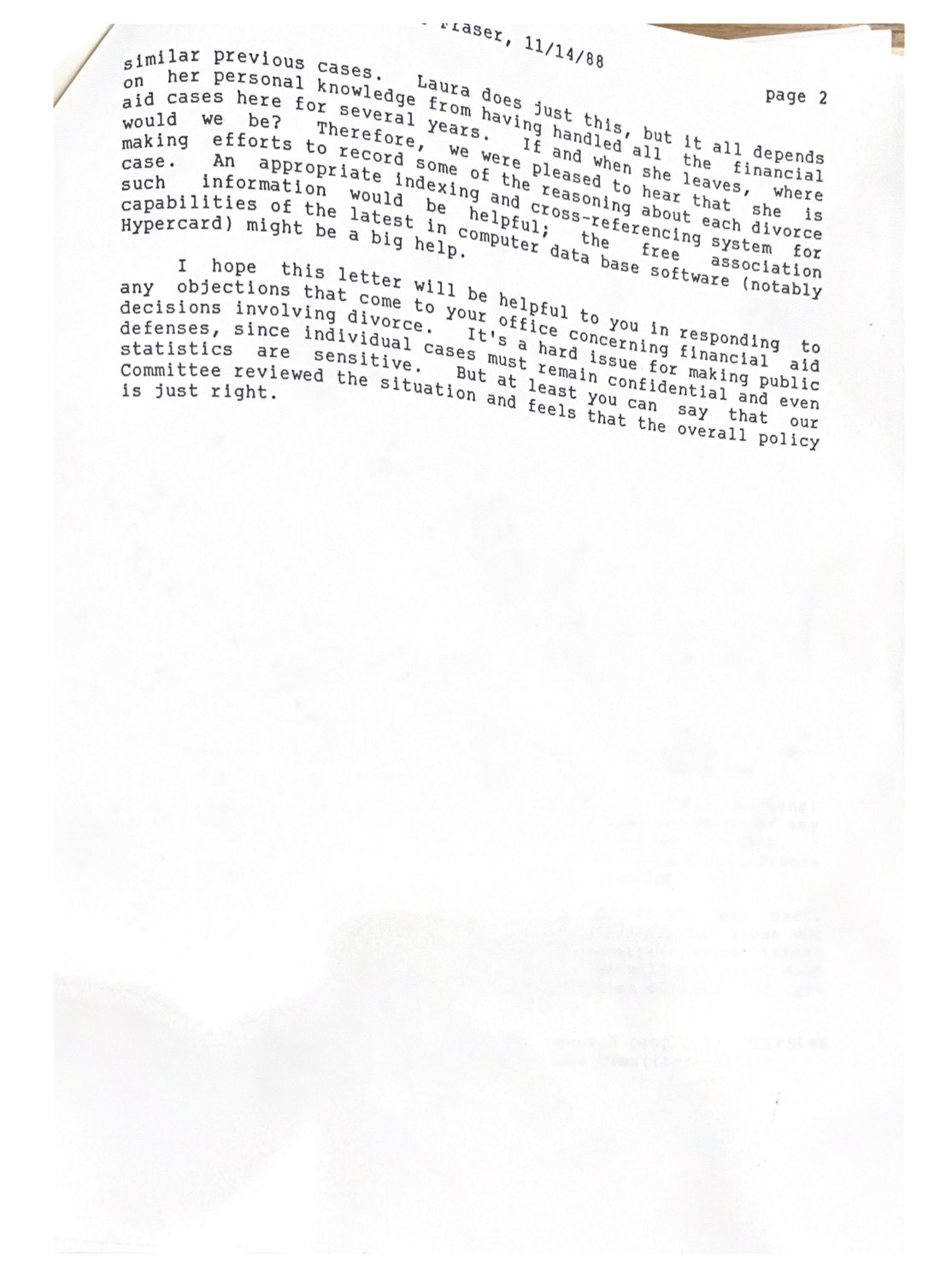
In 1988, Swarthmore reaffirmed its policy on financial aid for students with divorced parents and advised against formalizing a policy with a set of rules about exceptions, fearing that some parents of aid applicants would become more argumentative.
Election of Al Bloom & Establishment of IC
In 1991, Al Bloom was elected as the 13th President of Swarthmore College. In their thesis, Ali Roseberry-Polier ’13 described the election of Al Bloom as a “turning point in terms of administrative attention to issues of diversity” (Source). The previous president, David Fraser, had blocked the establishment of the Intercultural Center (IC) stating that it “would not be a good use of funds and would isolate students from each other.” (Roseberry-Polier, 13).
Therefore, it was fitting that one of Bloom’s first actions as president was to establish the IC, which formally opened on April 4, 1992. This move demonstrated a renewed commitment to diversity at Swarthmore College under Bloom’s leadership.