The year 2009 served as a turning point for institutional recognition of FLI students. For the first time, Swarthmore began to track the attendance of low-income students through the tracking of Pell Grant recipients. Historical data for first-generation students began nine years before in the year 2000.
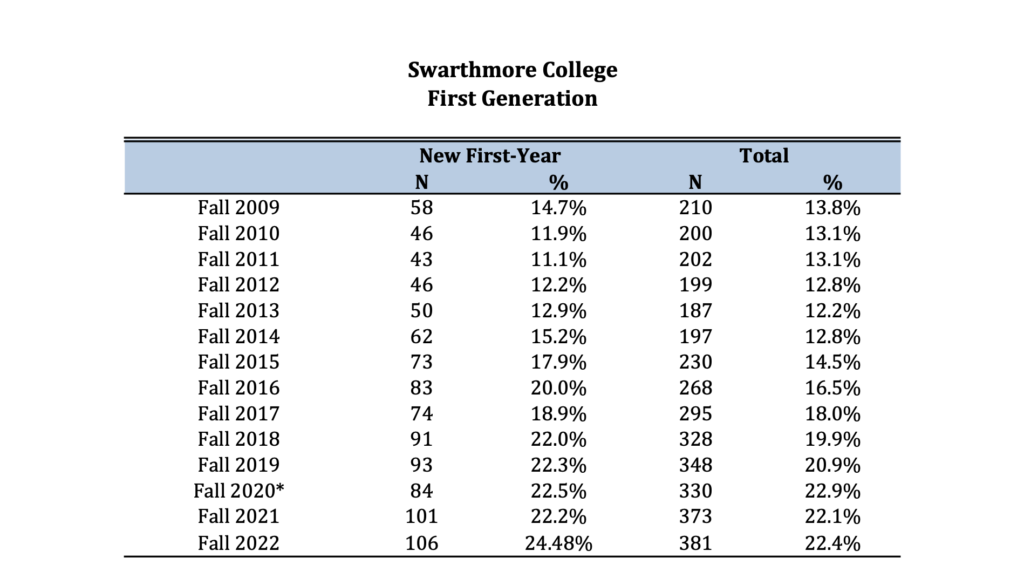
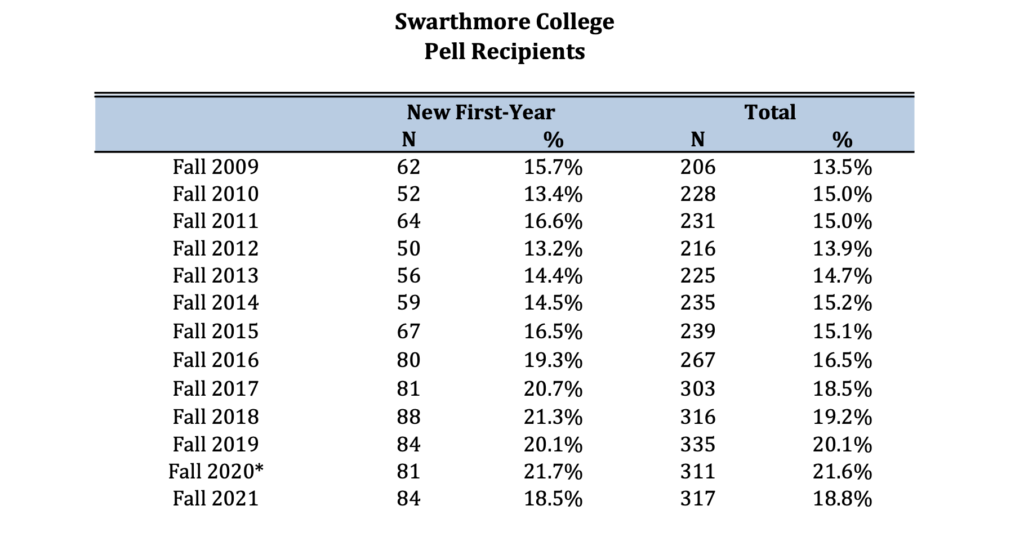
From 2009 to 2022, first-generation students grew from around 15% of the student population to 25% of the student population. The percentage of Pell Grant recipients has stayed relatively the same with 16% in 2009, and 18.5% in 2021. It should however be noted that since Pell Grants are only received by U.S. Citizens that it cannot be used as a reliable proxy for counting the number of low-income students served by the college. Additionally, a Brookings report has indicated that many low-income students do not receive Pell Grants.
Fall 2009: Pell Grant Recipients and Non-Pell Grant Recipients
New First-Year Students
No Data Found
Fall 2009: First Generation and Continuing Generation Students
New First-Year Students
No Data Found
Data source for First Generation Students @ Swarthmore
Data source for First Generation Students @ Swarthmore
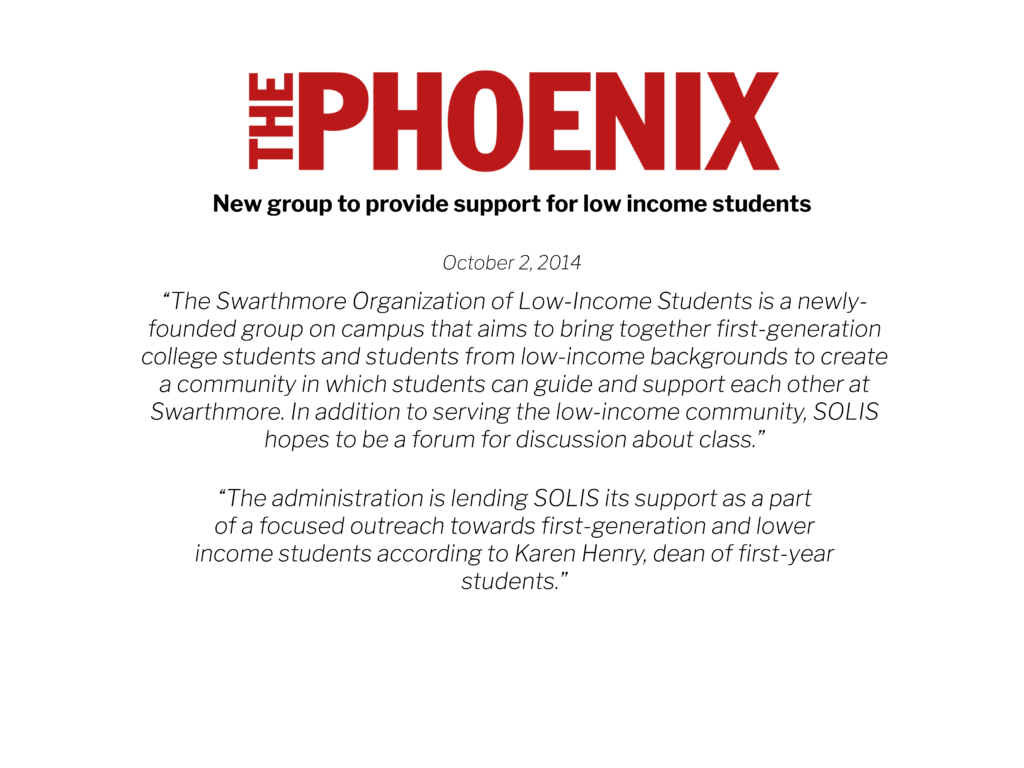
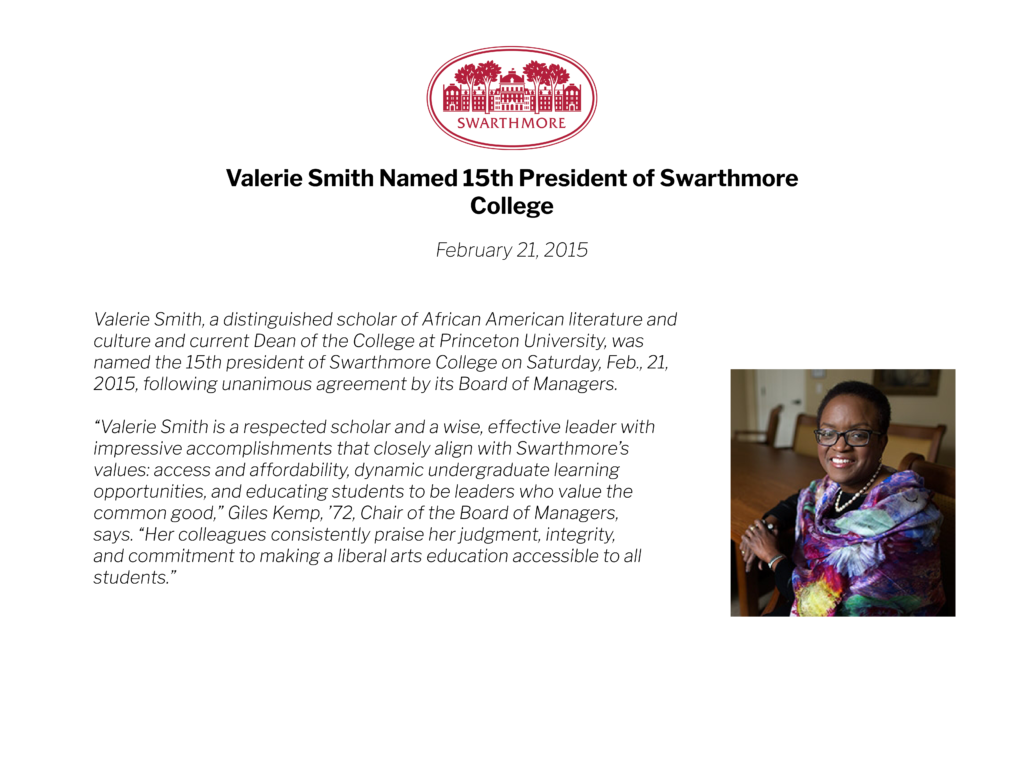
In the wake of a nationwide movement to recognize FLI Students, SOLIS is founded.
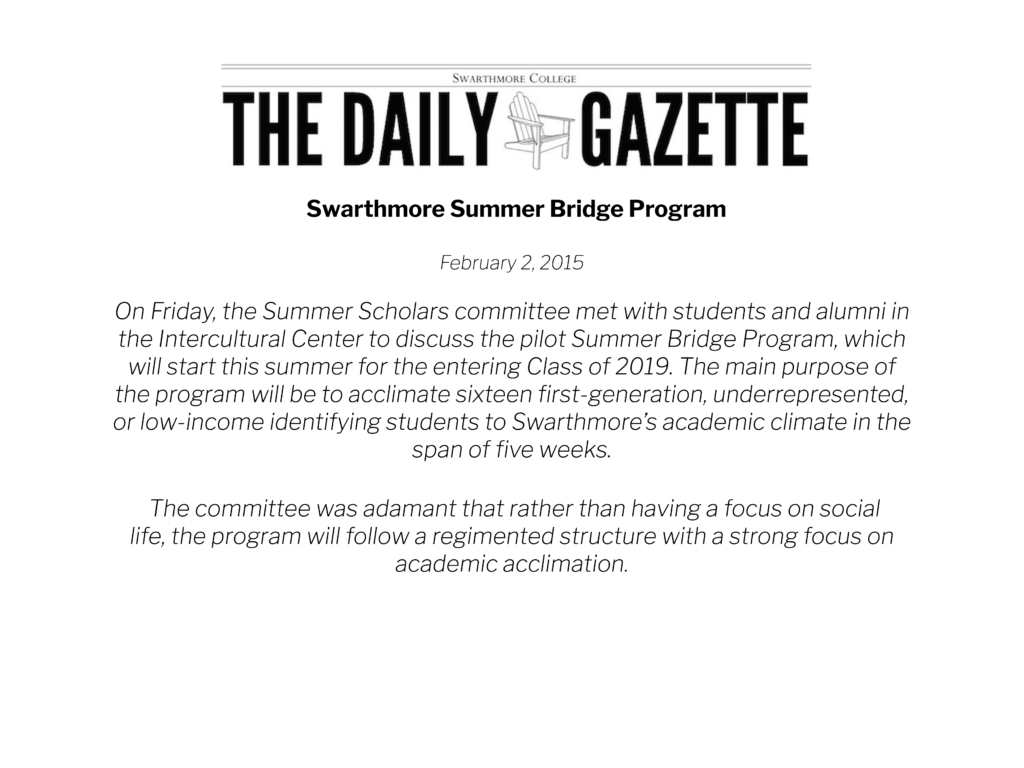
Five years after the IC/BCC Coalition release their bridge report, Swarthmore announces the Swarthmore Summer Scholars (S3P) citing the report as inspiration for the program.
The Textbook Affordability Program
At the end of 2008-2009 school year, the student council voted to allocate $10,000 in surplus rollover funds to the libraries with the intention of having them purchase required textbooks for students. This fund lasted until the end of spring semester whereafter College Librarian Peggy Seiden used library budget dollars from the monograph collection to further support the program.
During the summer of 2015, the Deans Office reached out the libraries in an attempt to understand how the libraries could further support first-generation students. As a result, Donna Fournier volunteered to help Dean Karen Henry with improving access to textbooks for low-income students. They decided to help in two ways: further developing the textbook collection, and facilitating a workshop series to help first-generation students to better understand their options for accessing textbooks.
During 2016, the college convened a committee to better understand the issue surrounding textbook affordability. Together, the panel reviewed textbook assistance programs at peer institutions.
Sometime around 2020, a pilot program was launched with the Swarthmore Summer Scholars (S3P) providing $400 per semester for four semesters to help with textbook expenses. In 2021, the program was fully rolled out for all students providing a $700 stipend for the entire school year.
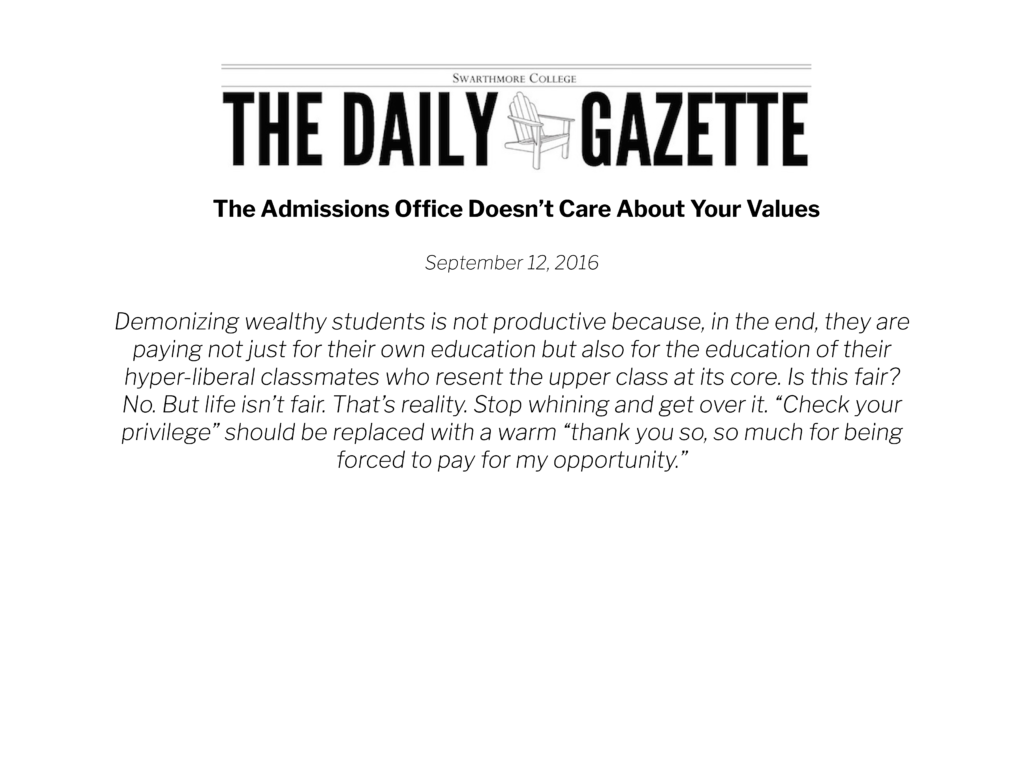
Daily Gazette publishes "The Admissions Office Doesn’t Care About Your Values"
On September 12, 2016 Swarthmore publication ‘The Daily Gazzette” publishes a controversial article written by Erin Jenson who suggest that low-income students at Swarthmore thank wealthy students for subsidizing their education. Not long after, the Daily Gazette retracts the article and provides an explanation with the article “We Fucked Up”
Swarthmore’s report states that the college should “Extend and sustain support for longer than the first year by building on pre-existing programs and by moving beyond Orientation Week workshops.”