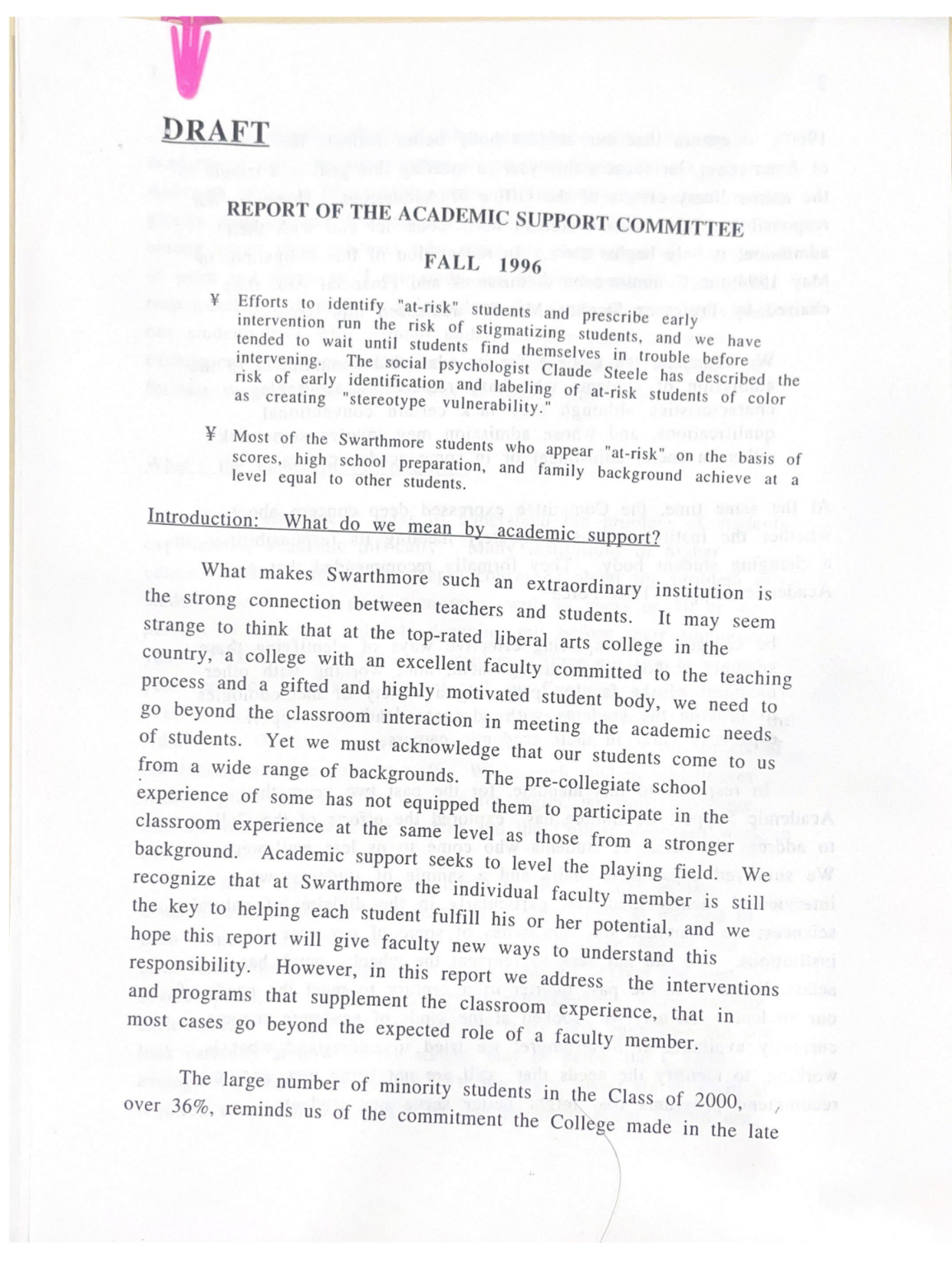
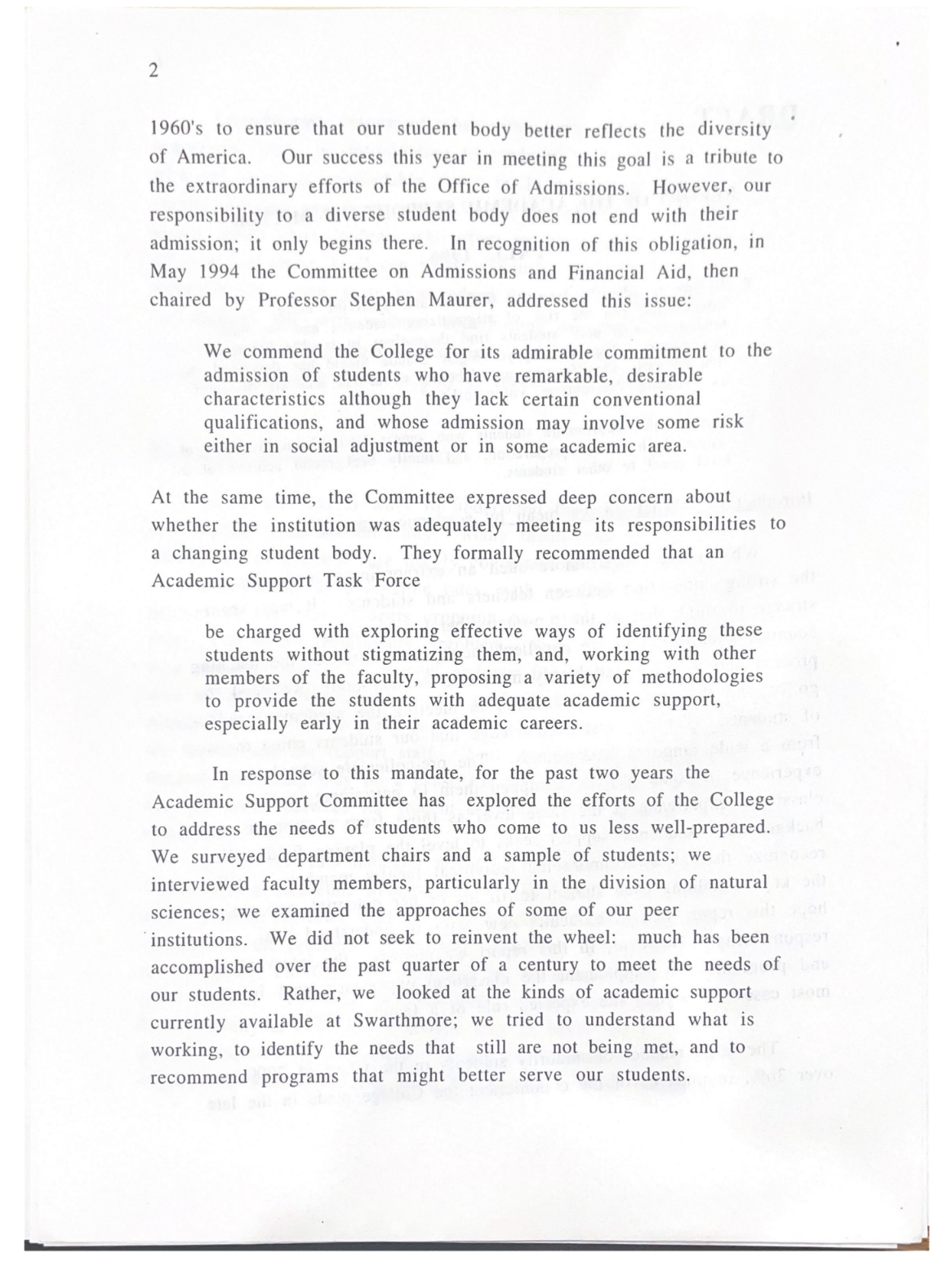
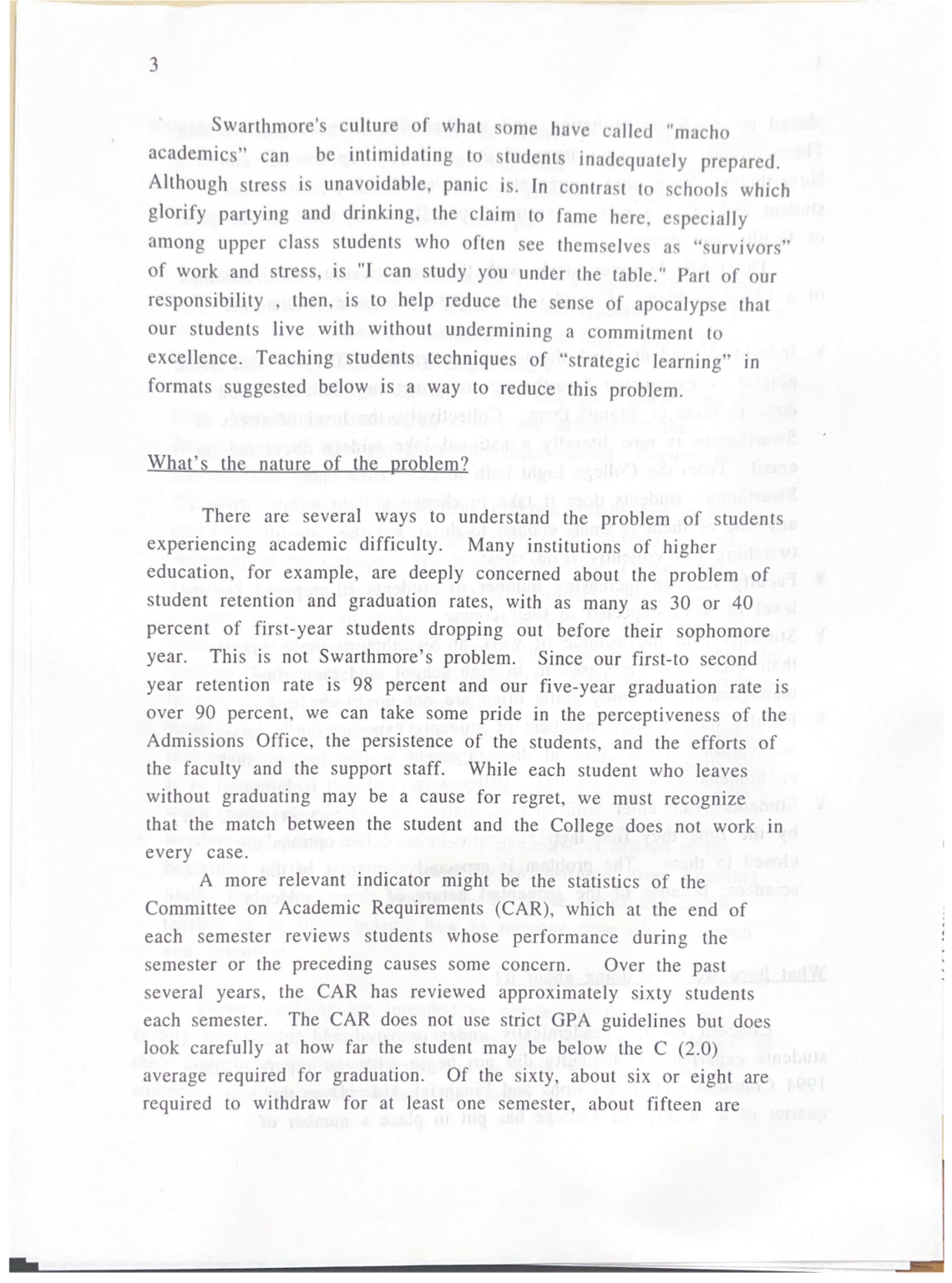
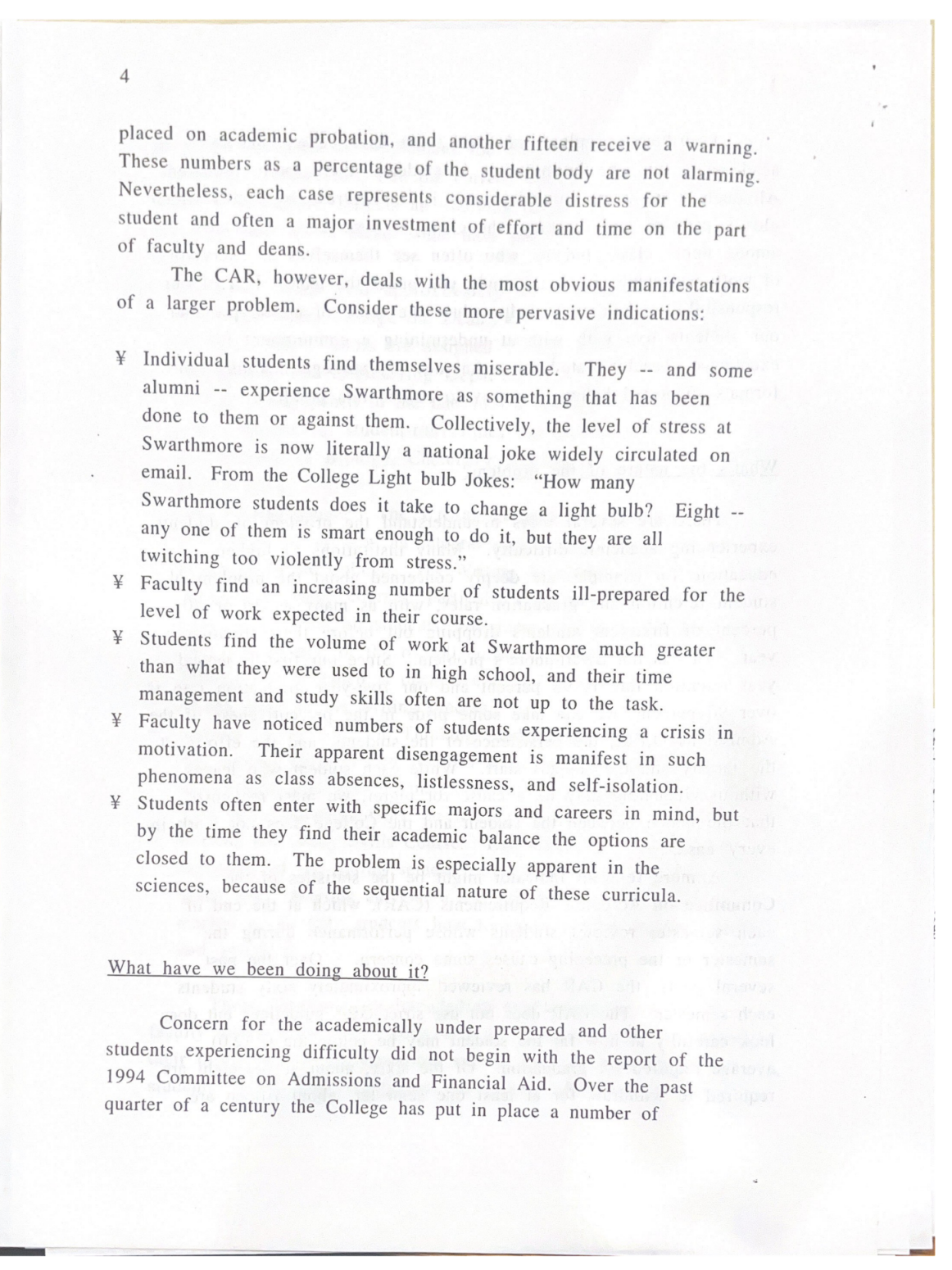
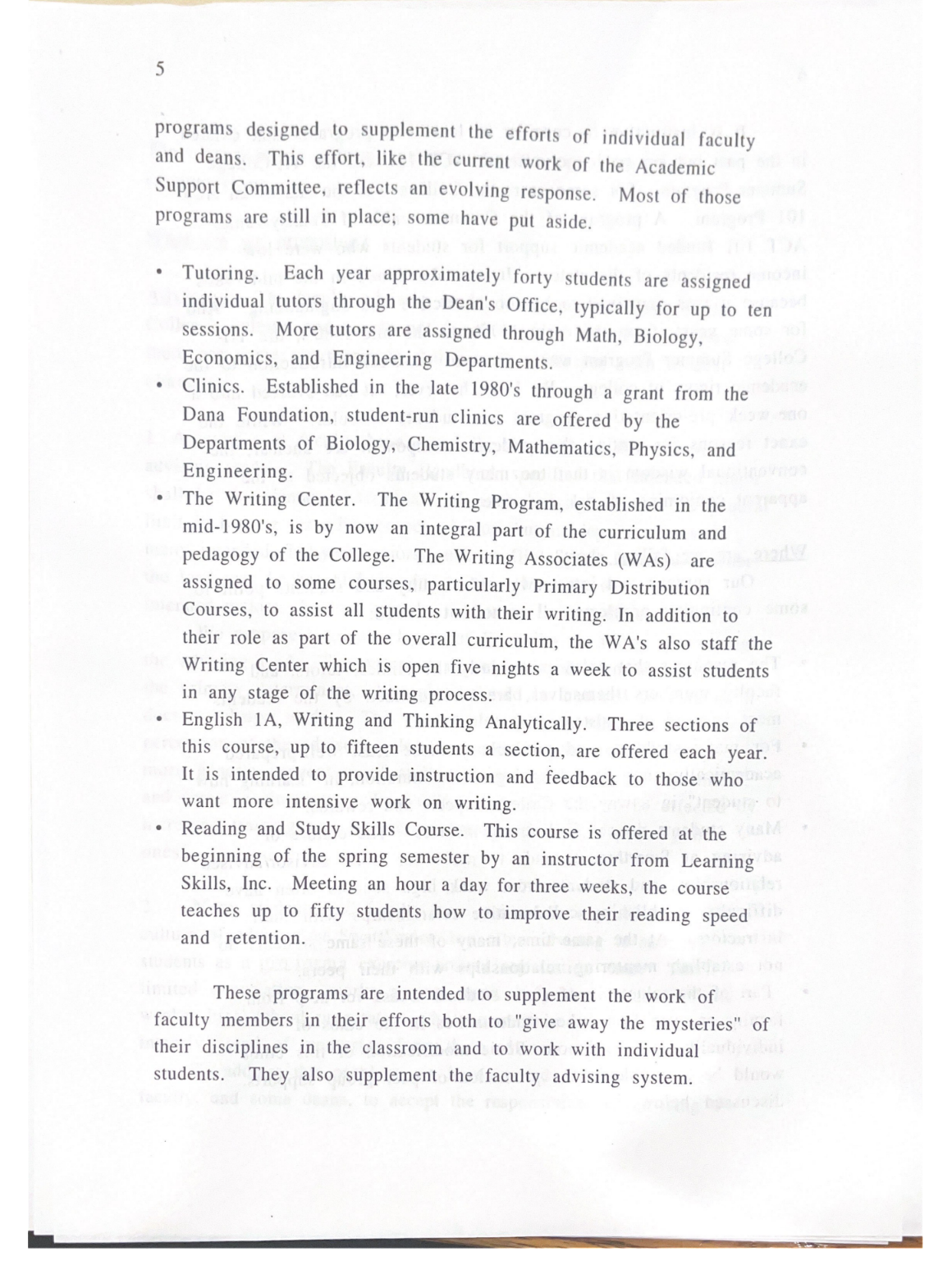
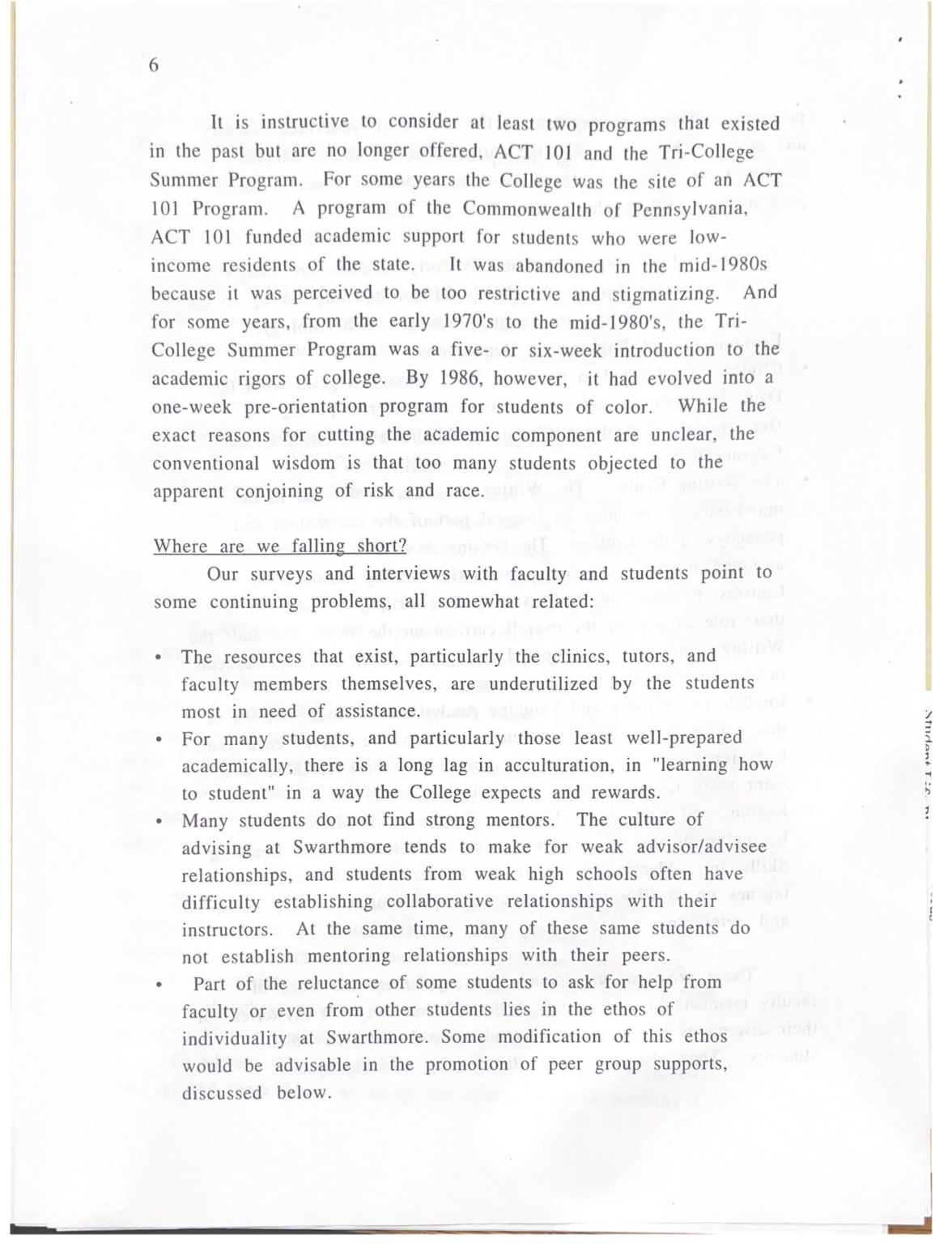
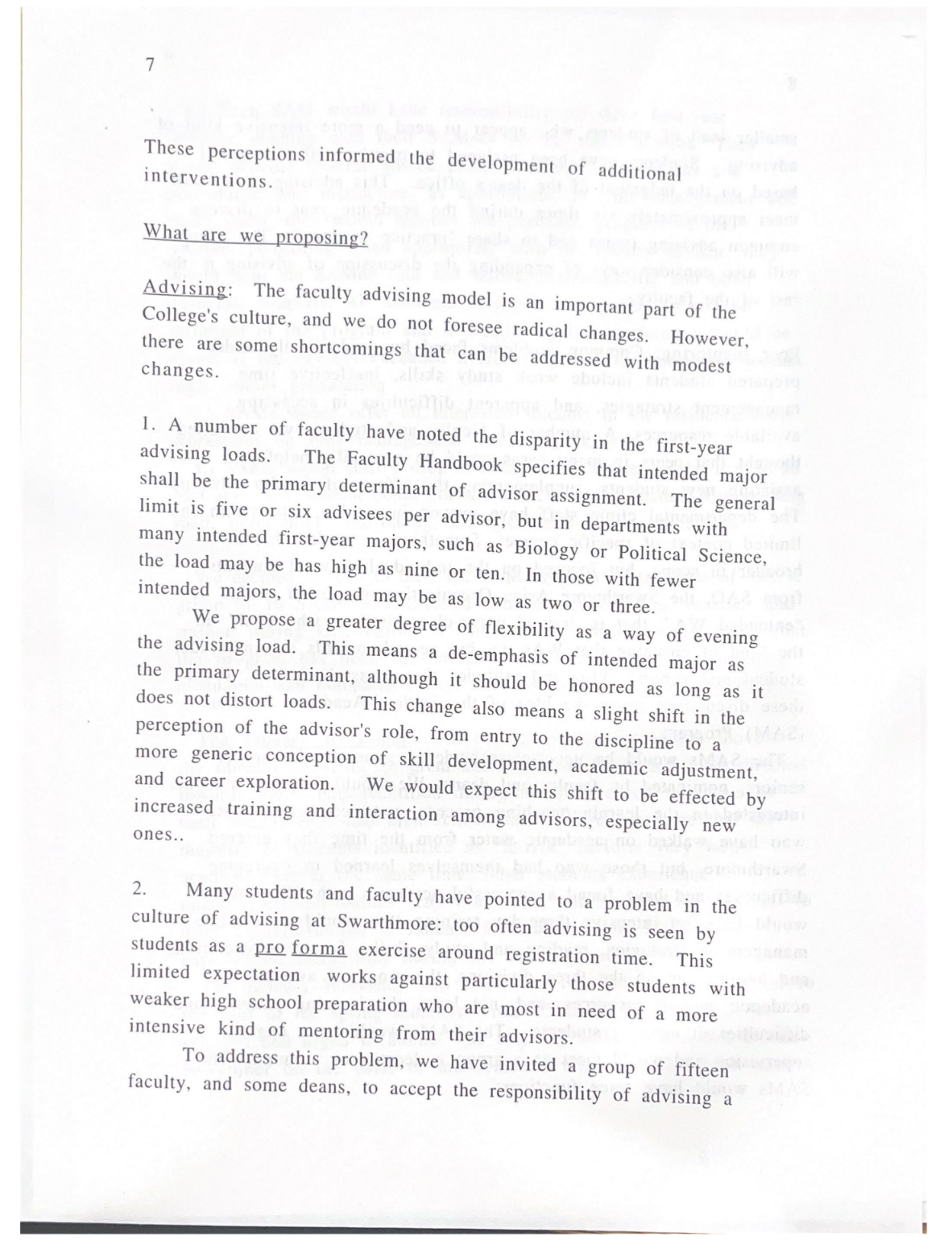
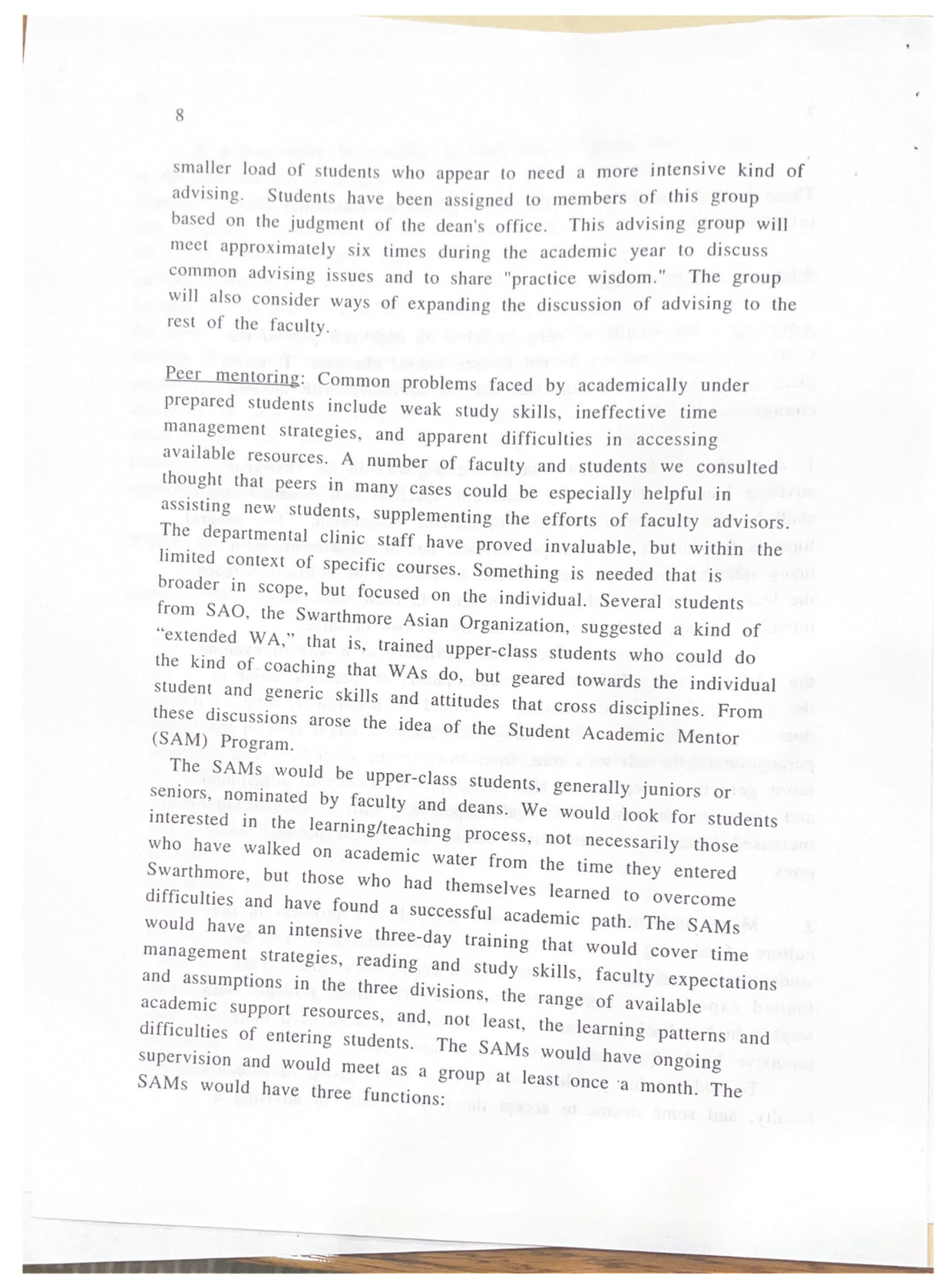
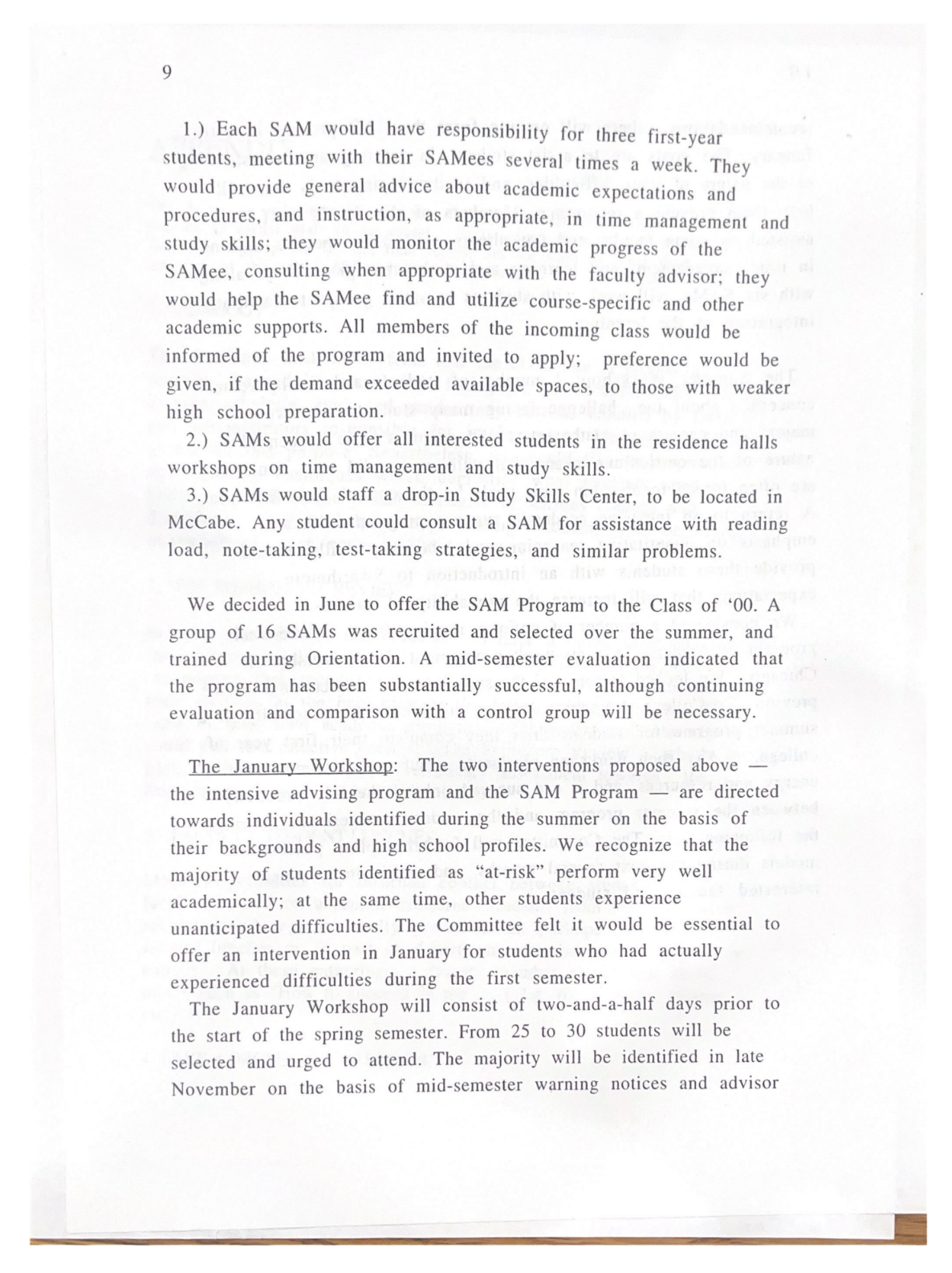
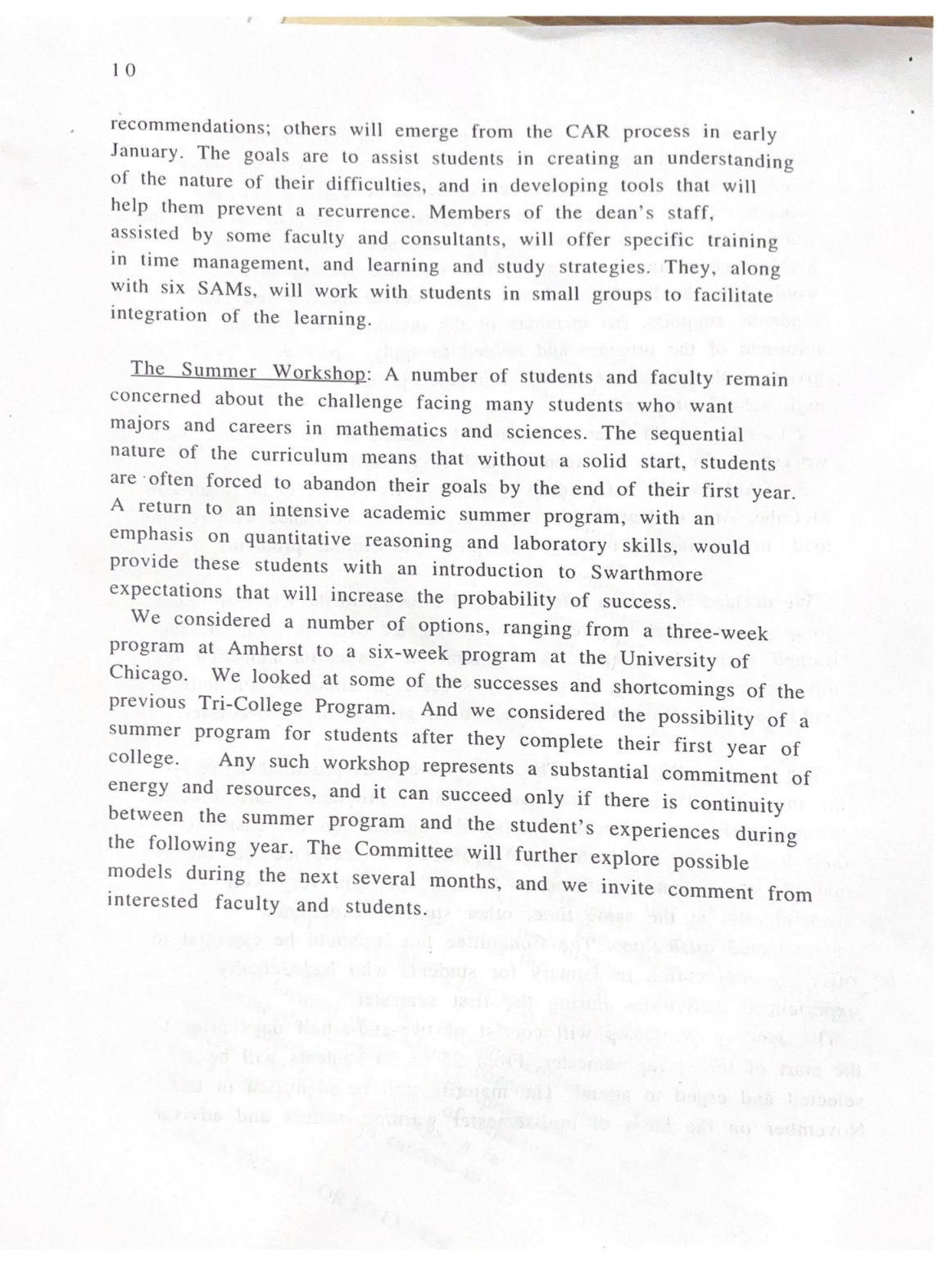
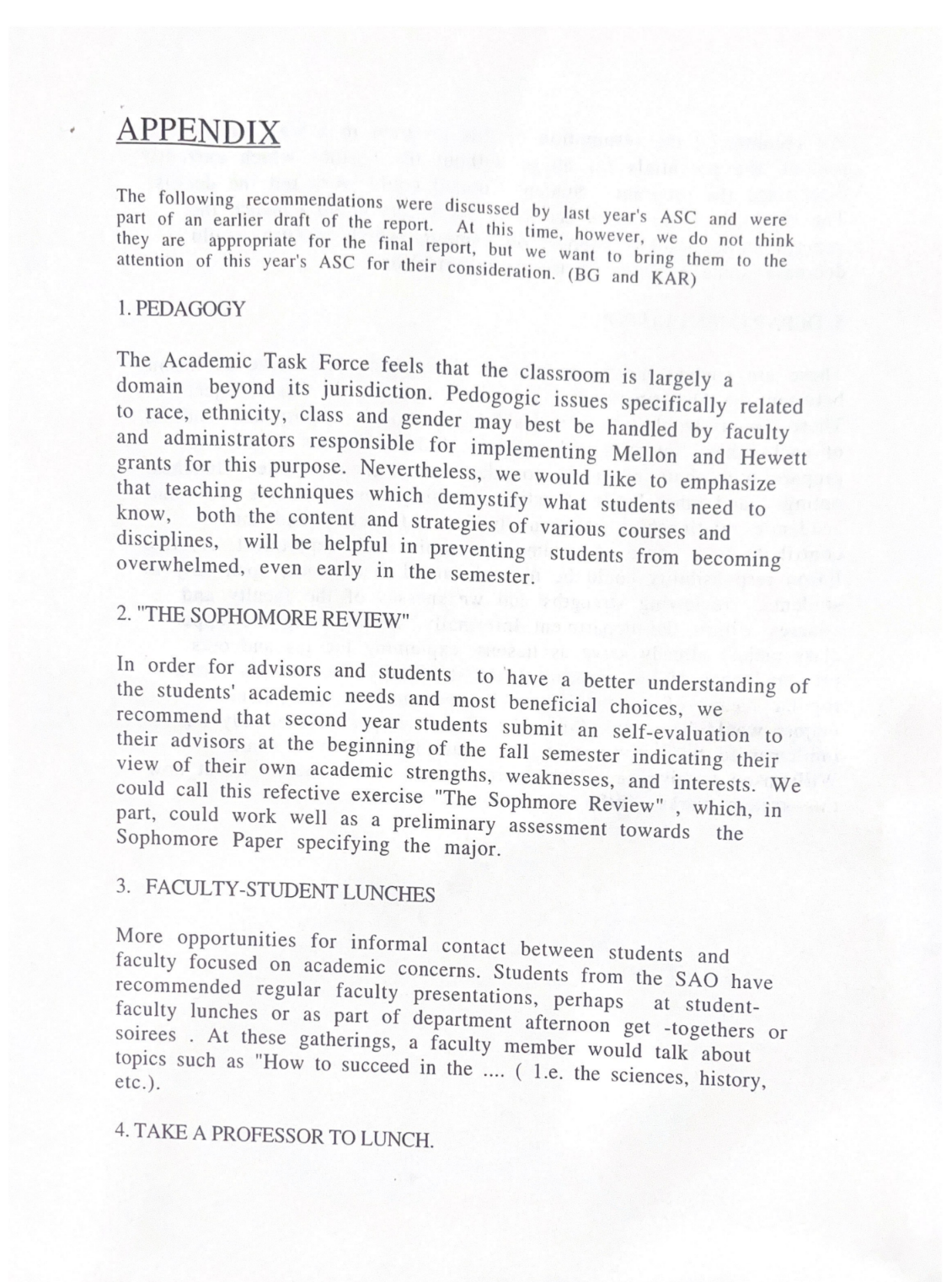
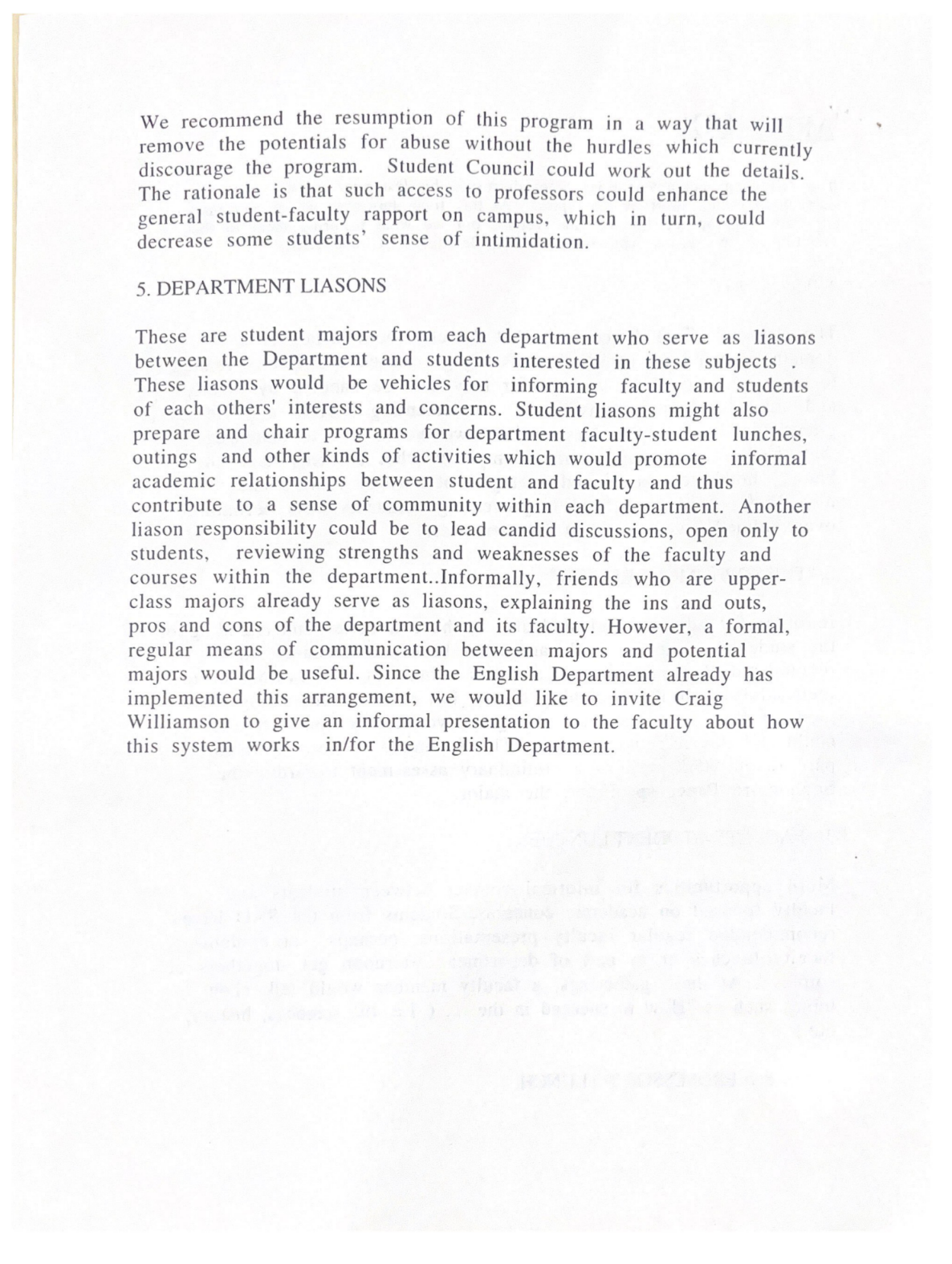
In a report crafted in the Fall of 1996, the Academic Support Committee at Swarthmore College reflects on two years of work, identifying problems faced by underserved and underprepared students. The committee notes that the challenges are not directly related to retention and graduation rates, as these are substantially high compared to other institutions.
Instead, the committee identifies five key areas of concern:
Individual students feeling overwhelmed and unhappy.
Faculty noticing that students are not adequately prepared for the intensity of classwork.
Students finding the workload much greater than they were accustomed to.
Students facing a crisis in motivation.
Students struggling to achieve academic balance and finding that certain desired career paths are no longer available to them.
The report also provides insights into how the college has attempted to address these issues. Strategies include individual tutoring opportunities, STEM clinics, support from the Writing Center and Writing Associates (WA’s), and courses designed to enhance writing skills and develop study techniques.
1996 Admissions Reshuffle
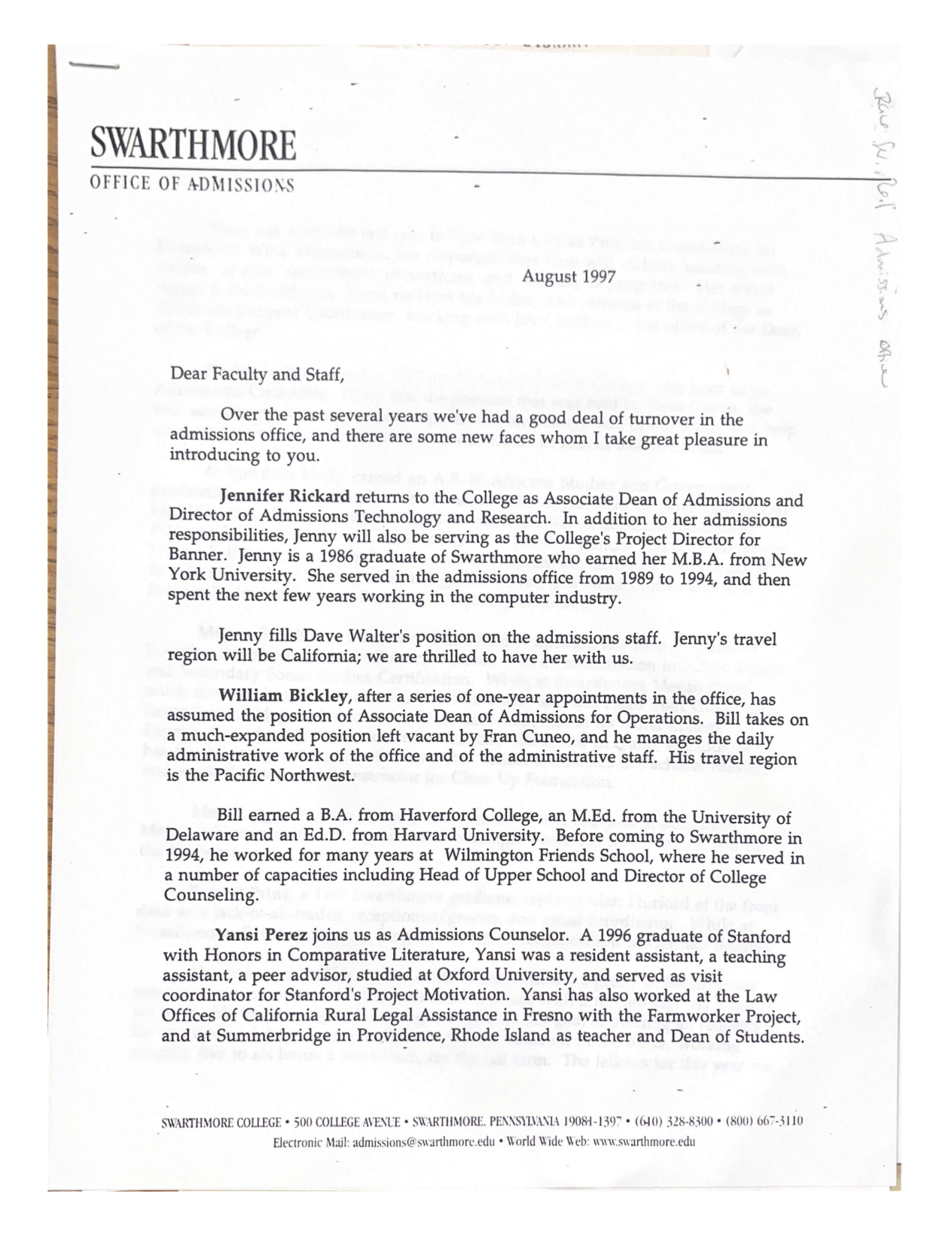
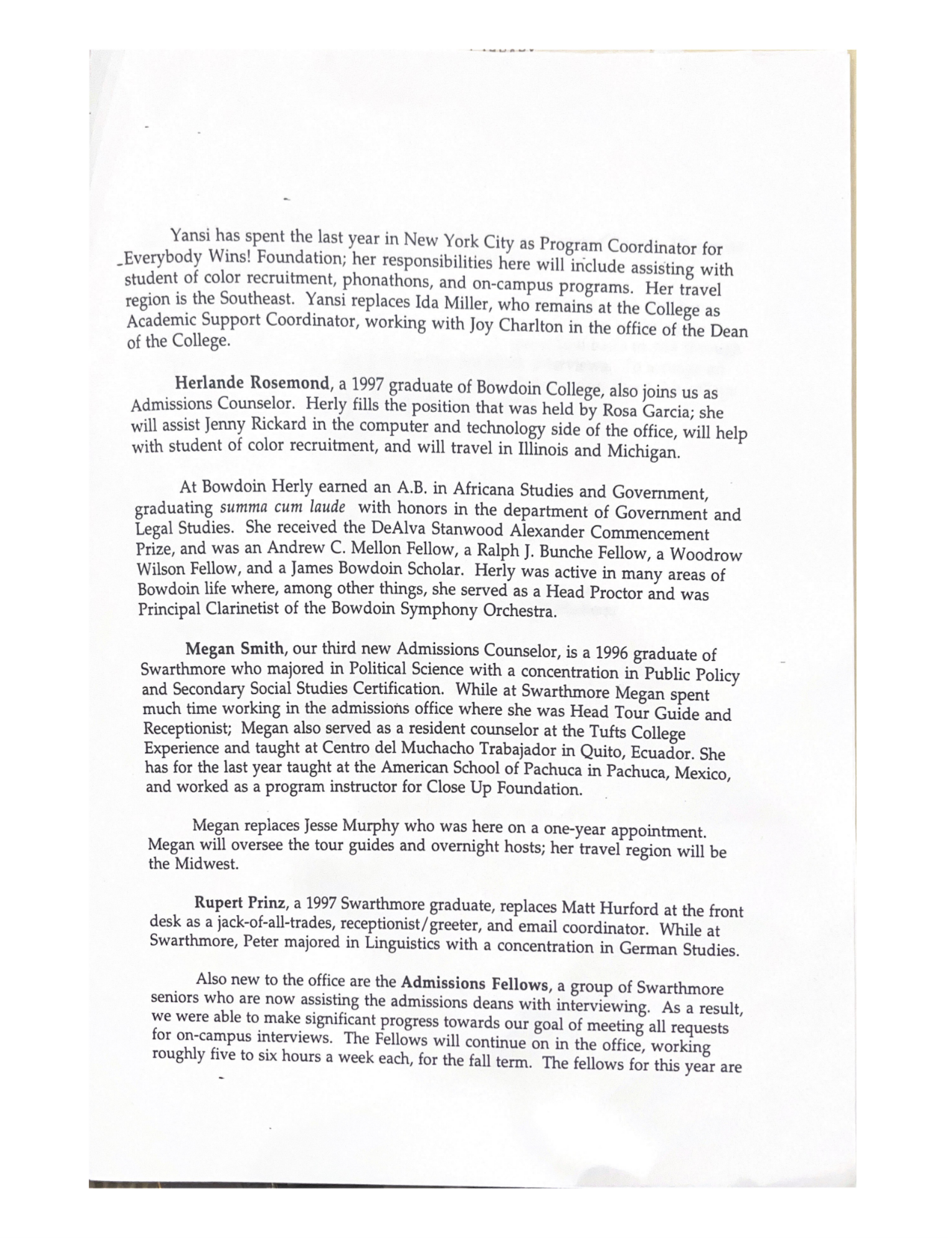
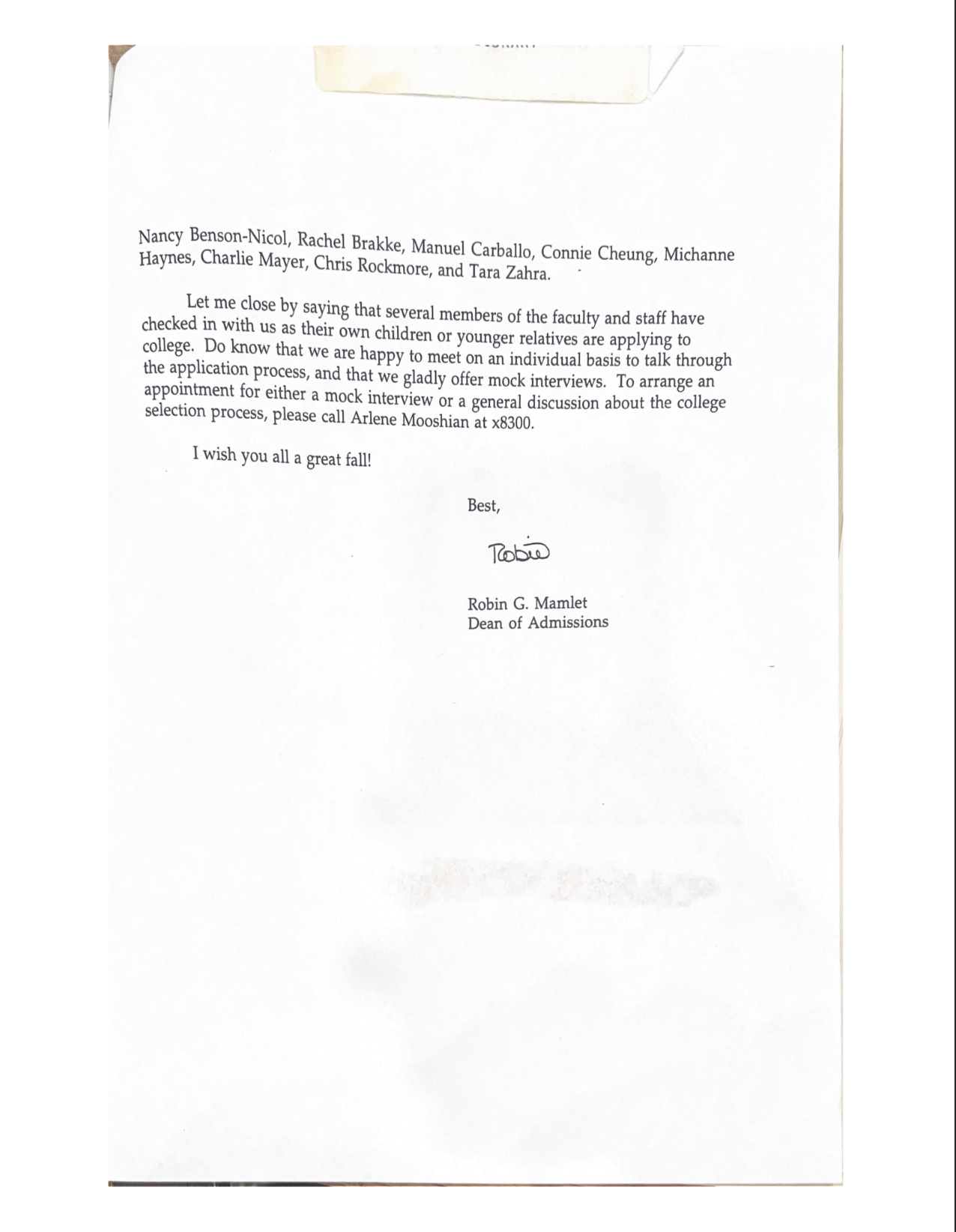
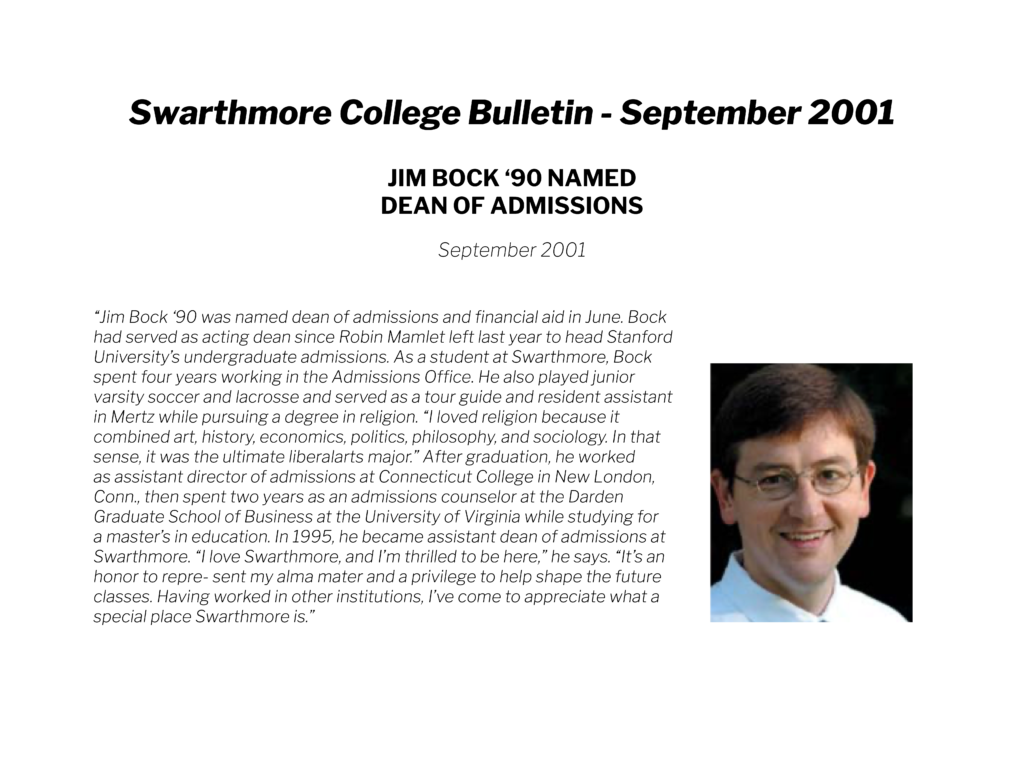
Following the appointment of Al Bloom, the institution underwent a broader shift internally, with a strong focus on increasing diversity. In the Fall of 1996, the appointment of Robin Mamlet as the new Dean of Admissions and the hiring of several other new admissions counselors led to significant changes in the admissions demographics at the university. The Hispanic/Latino representation increased from 3% to 10%, while the Asian/Asian-American population also experienced a growth from 4% to 10%. Additionally, the estimated number of queer students rose to approximately 10%. These shifts can be attributed, at least in part, to a revised approach in gathering input from student groups during the admissions process. Notably, many students contributed by creating admissions-related pamphlets, such as the informative publication titled “Queer and Questioning at Swarthmore.” Additionally, some students were able to more directly interact with prospective students as Admissions Fellows.
Scholarships for First-Generation Students
In 2003, the Stephen C. Schoenbaum ’62 Scholarship was established, becoming the first scholarship to prioritize first-generation students. The following year, in 2004, the Leonard Shapiro Scholarship was created, also with the purpose of serving first-generation students. In 2006, two more scholarships were introduced with a similar focus: The Gustavo R. Schwed ’84 and Lucy E. Harrington ’85 Scholarship, and the Winnifred Poland Pierce Scholarship Fund, both prioritizing first-generation students. Since 2006, no new scholarships with this focus have been established.
Richard Rubin Mentoring Program Established
In 2004, five former Swarthmore students – Maurice Foley ’82, Gordon Givens ’85, Keith Reeves ’88, Philip Weiser ’90, and Richard Rubin – donated money to initiate the Richard Rubin Mentoring Program. They were inspired to do this in recognition of the mentorship that Professor Rubin provided them during their time at Swarthmore.
The establishment of the Richard Rubin Mentoring Program can be interpreted as a response to one of the problems listed by the 1996’s Academic Committee: the concern that students were not forming strong mentorship relationships. This program aimed to address and alleviate this issue.
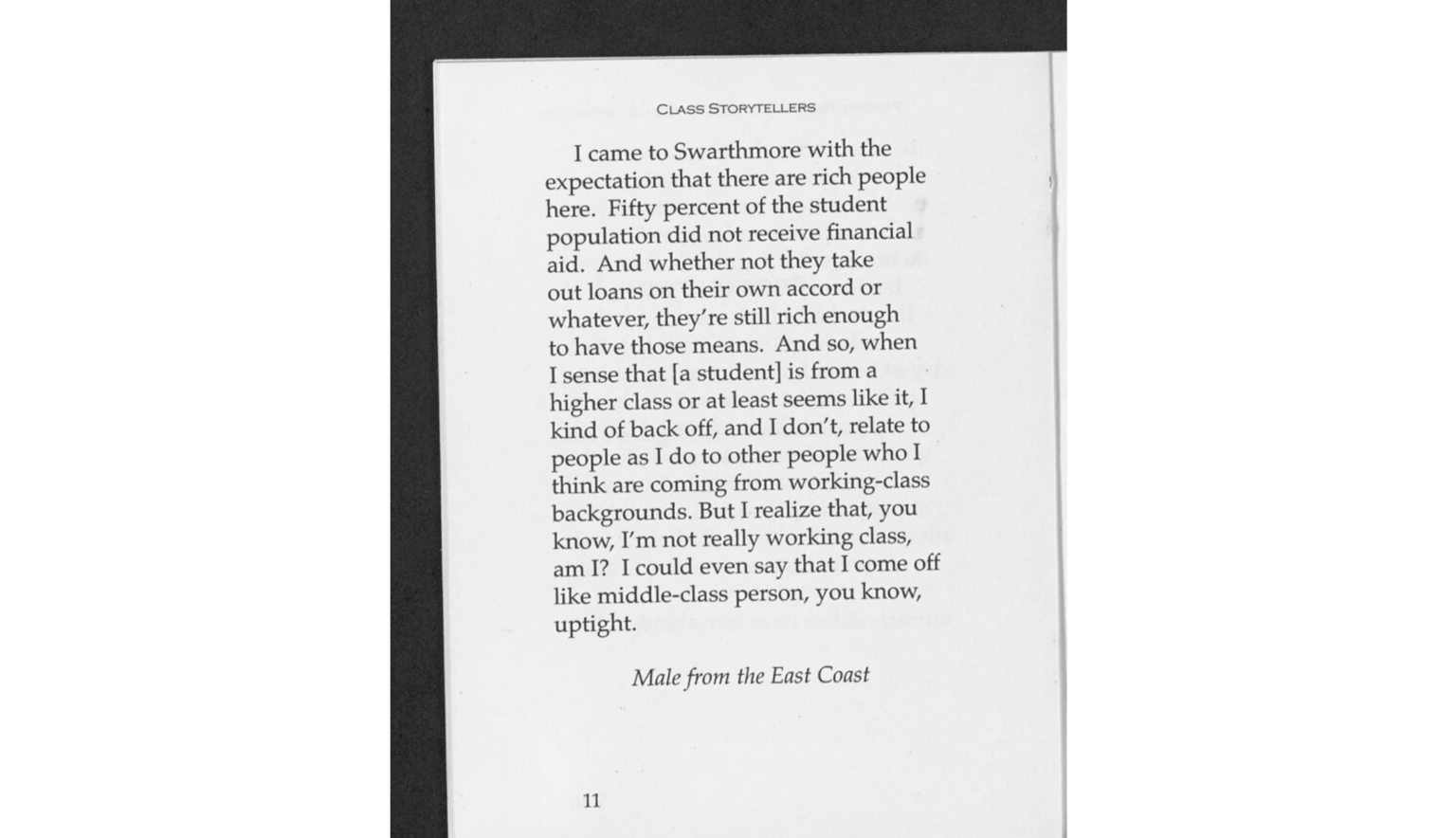
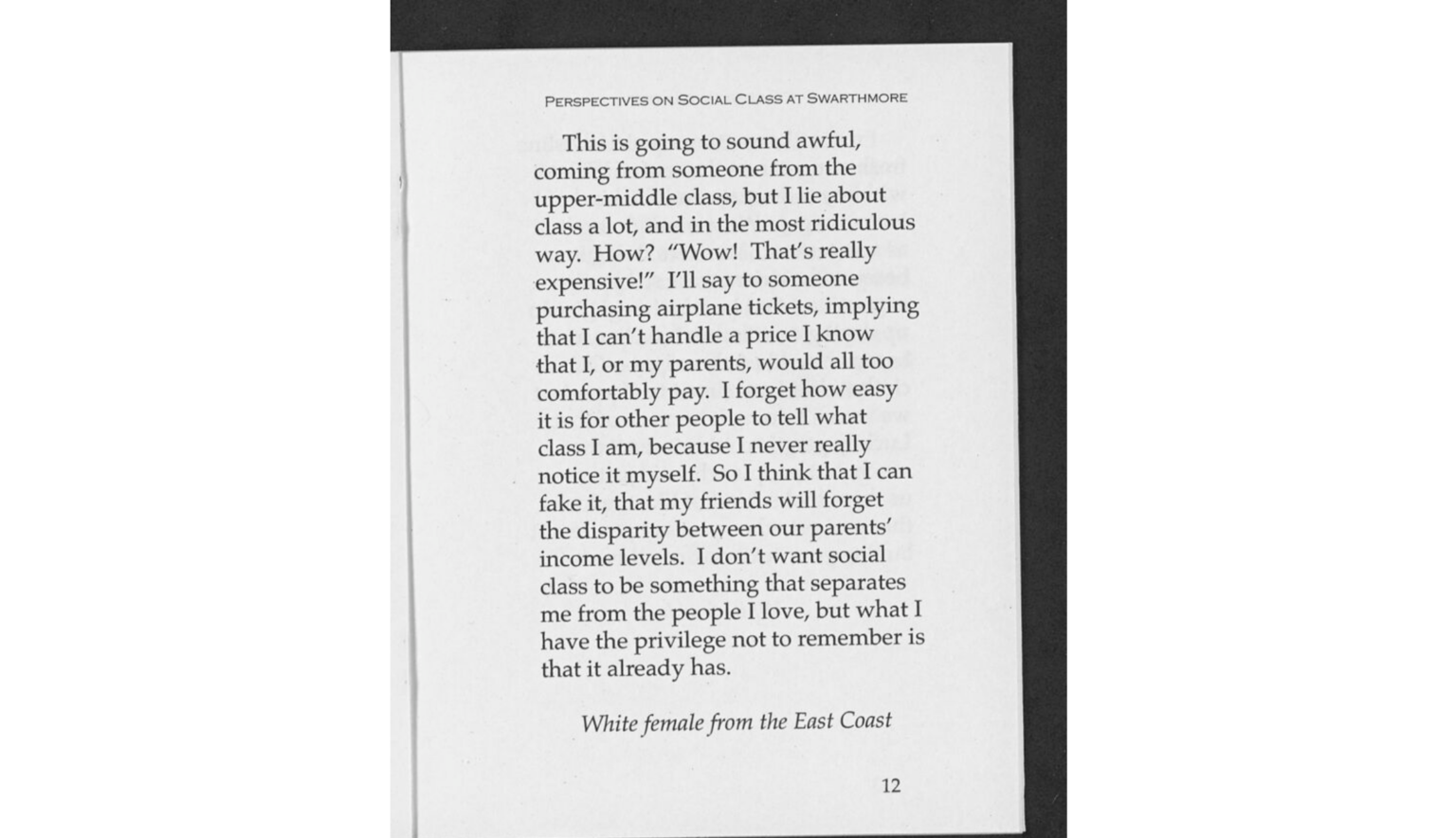
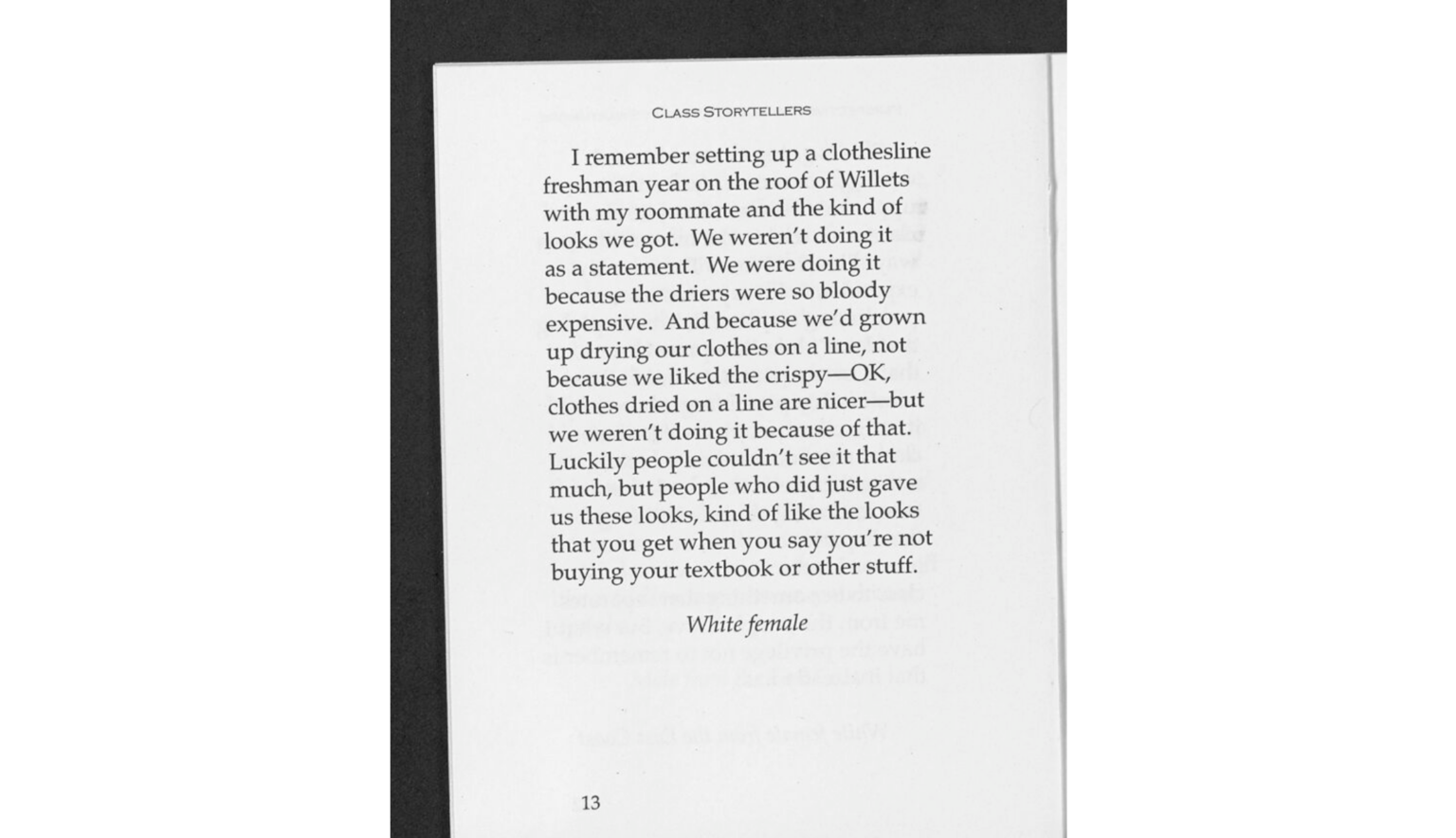
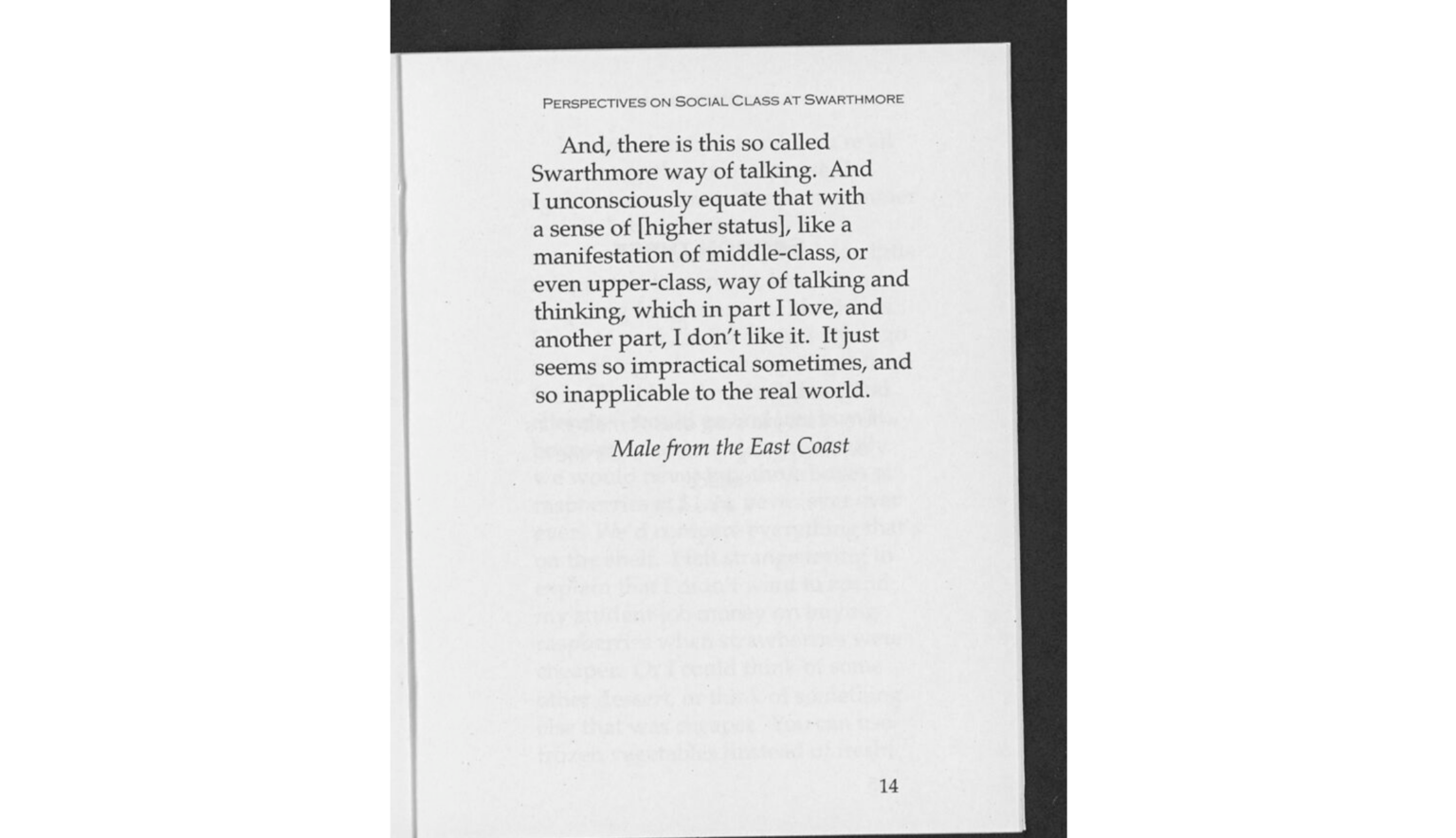
Class Storytellers Project
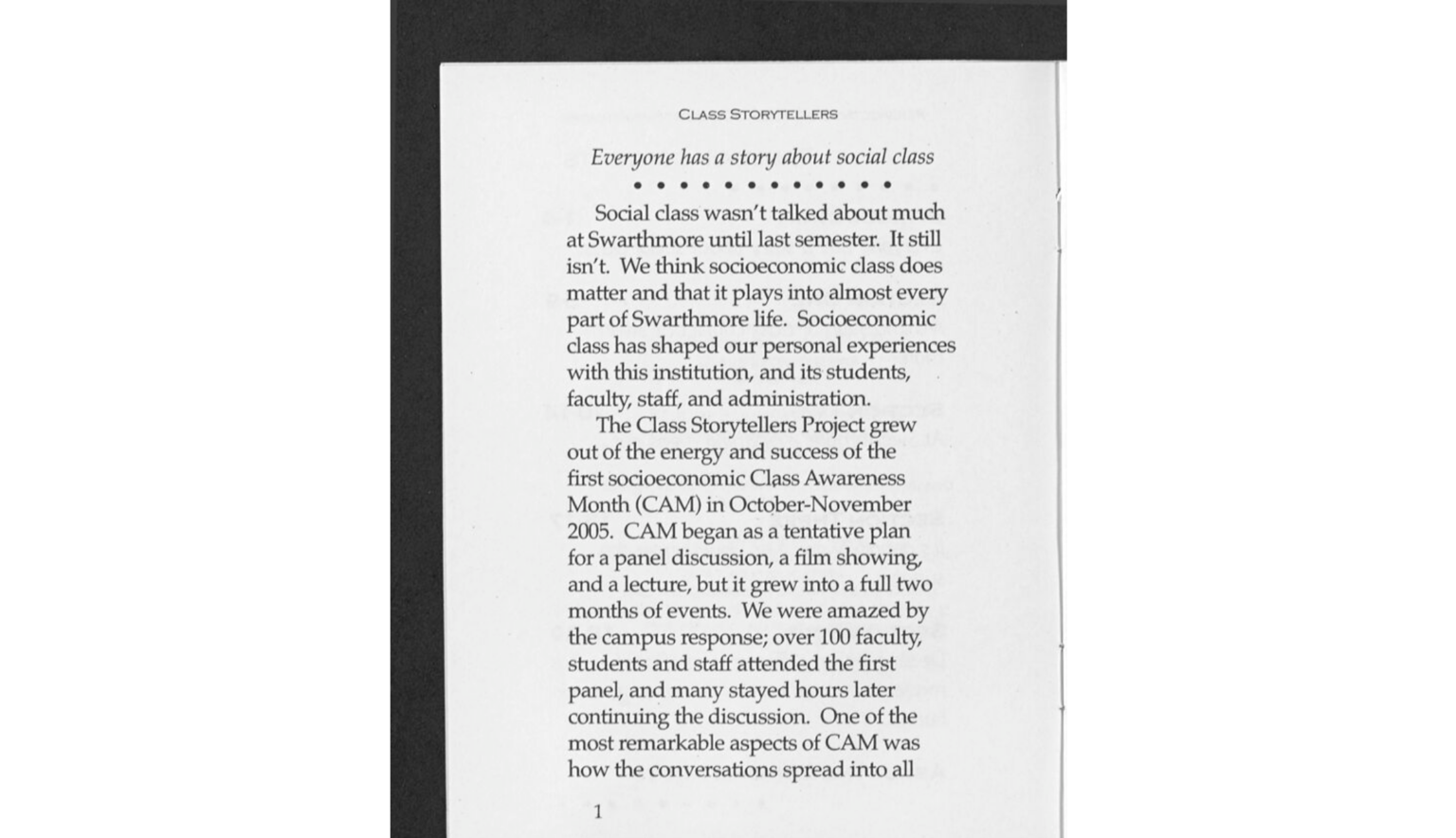
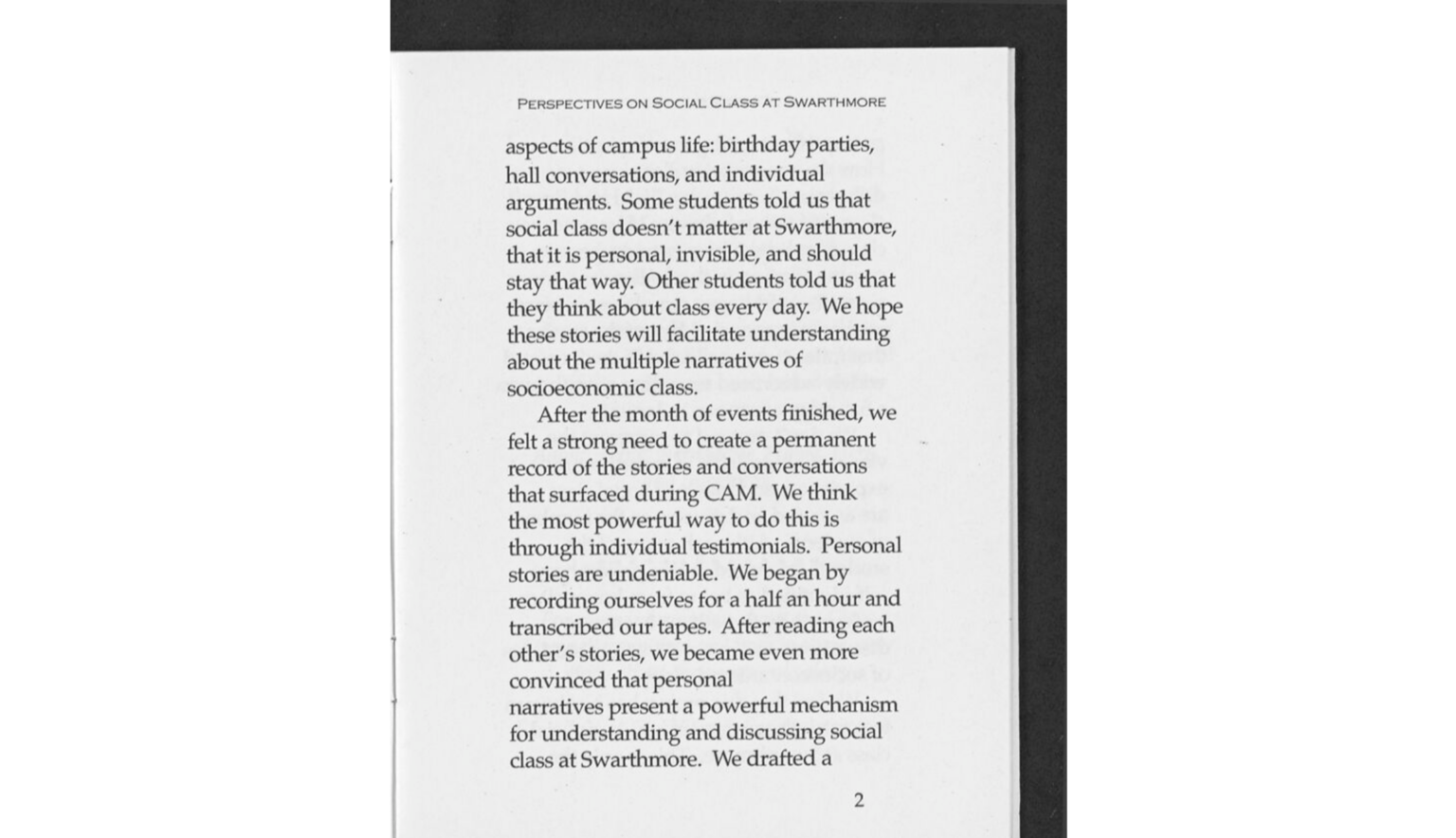
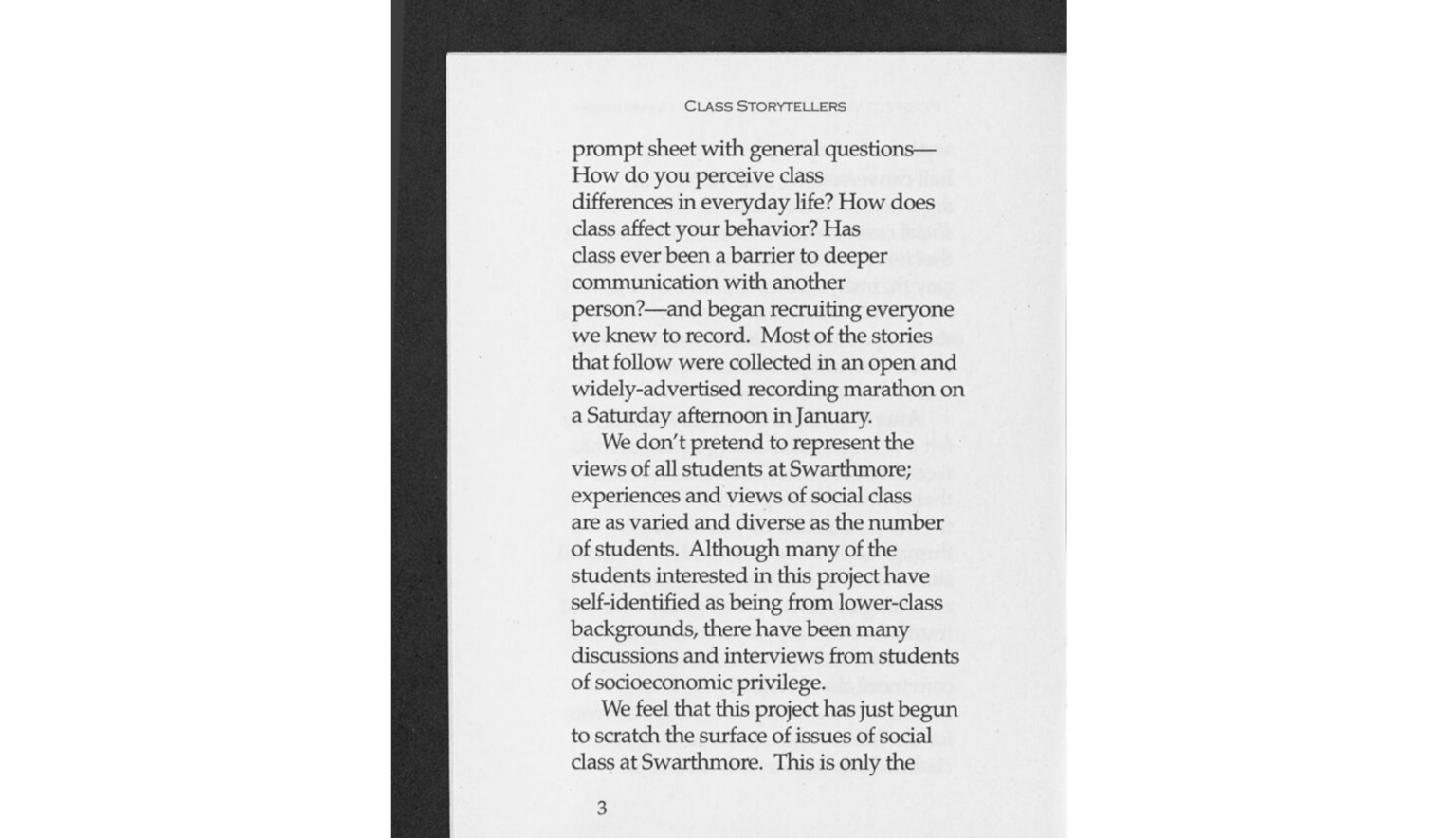
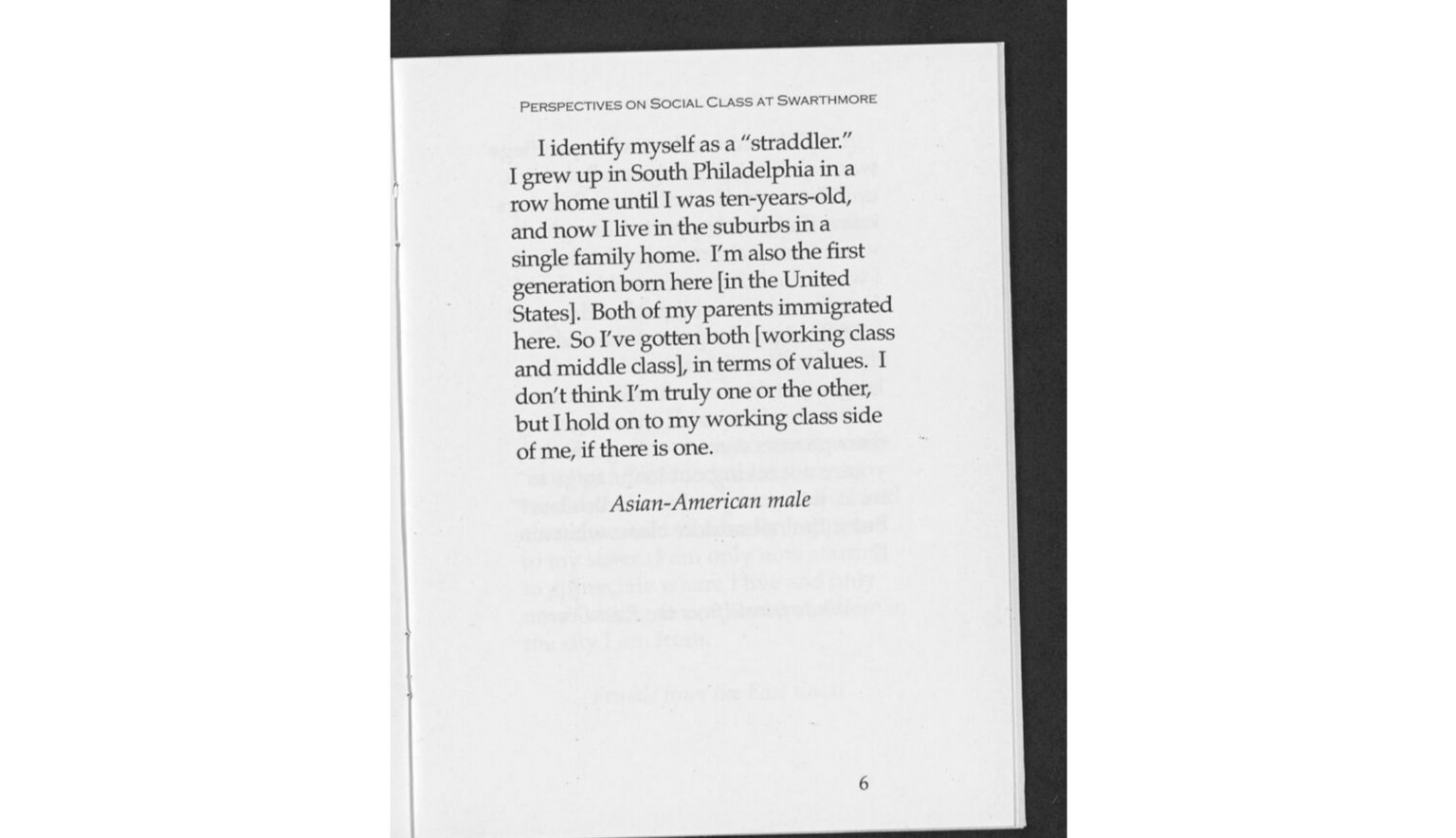
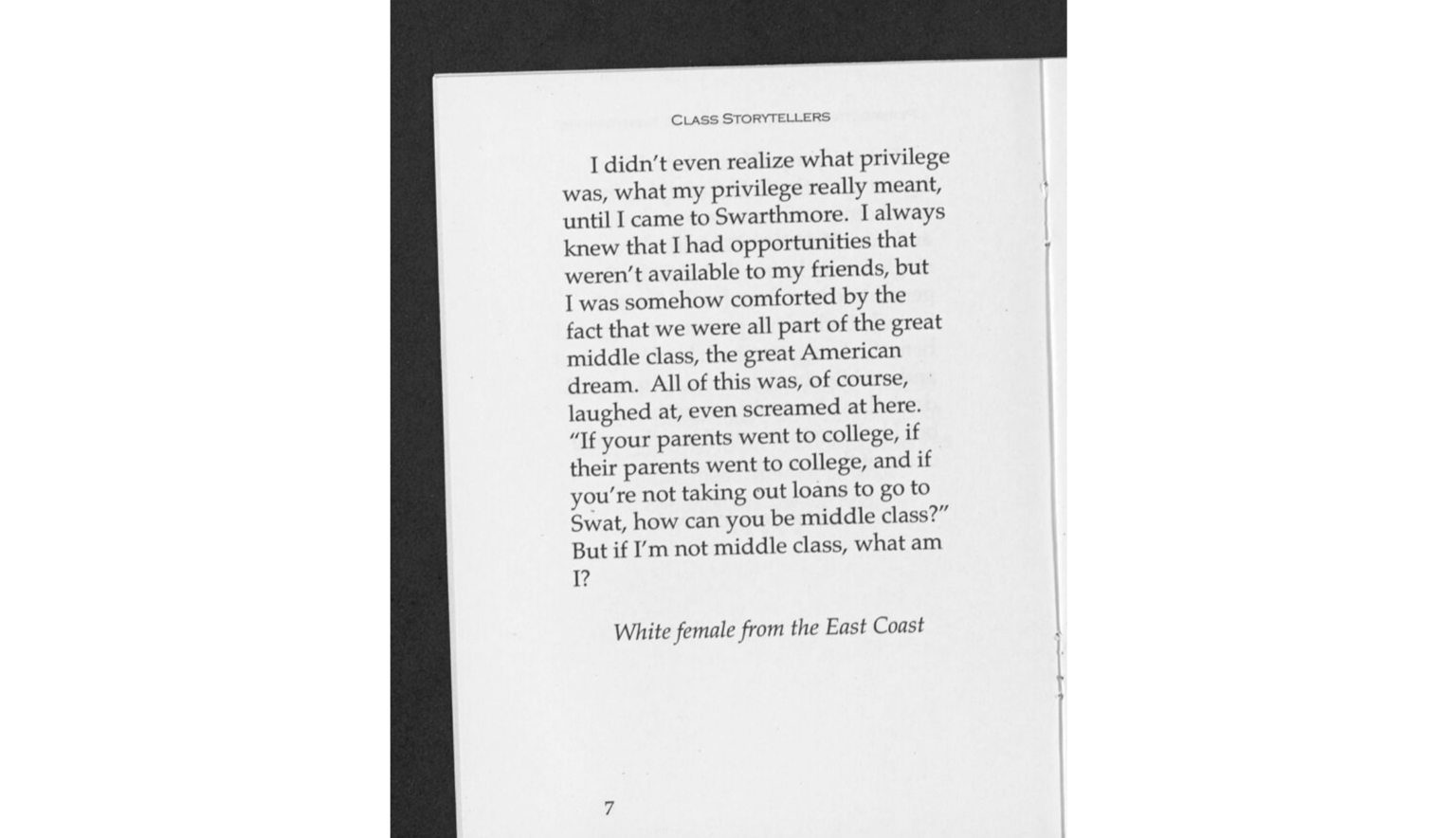
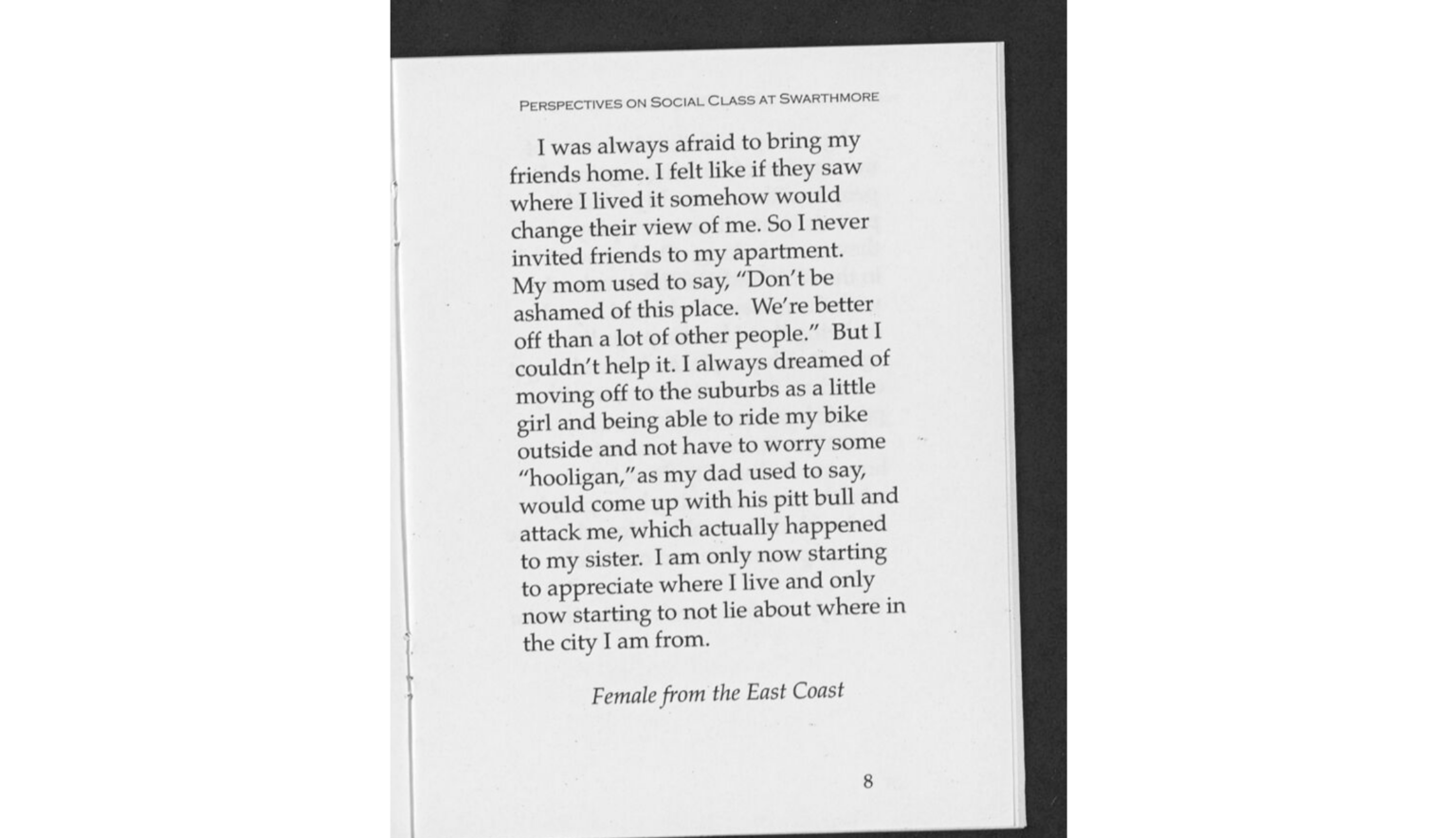
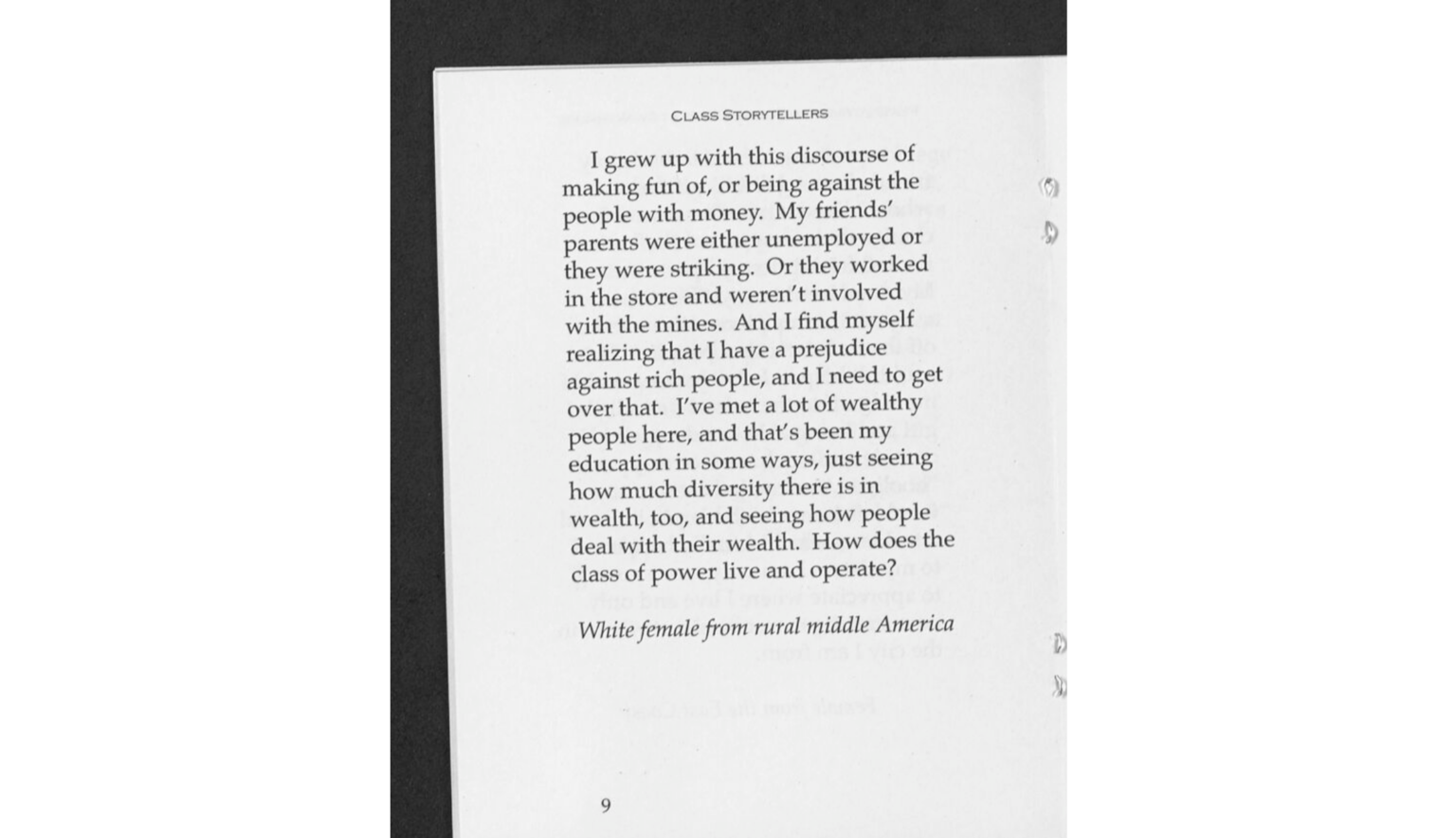
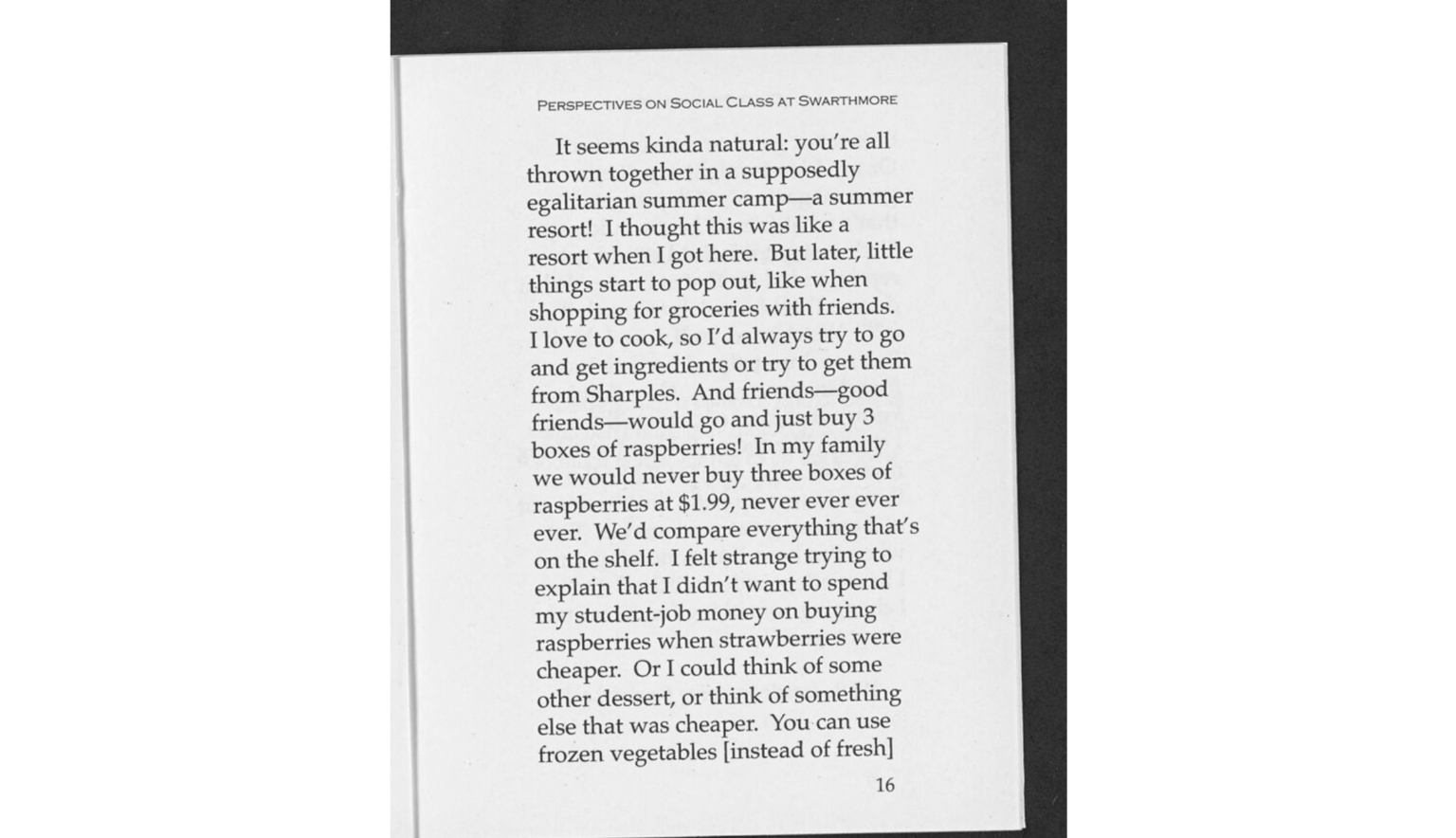
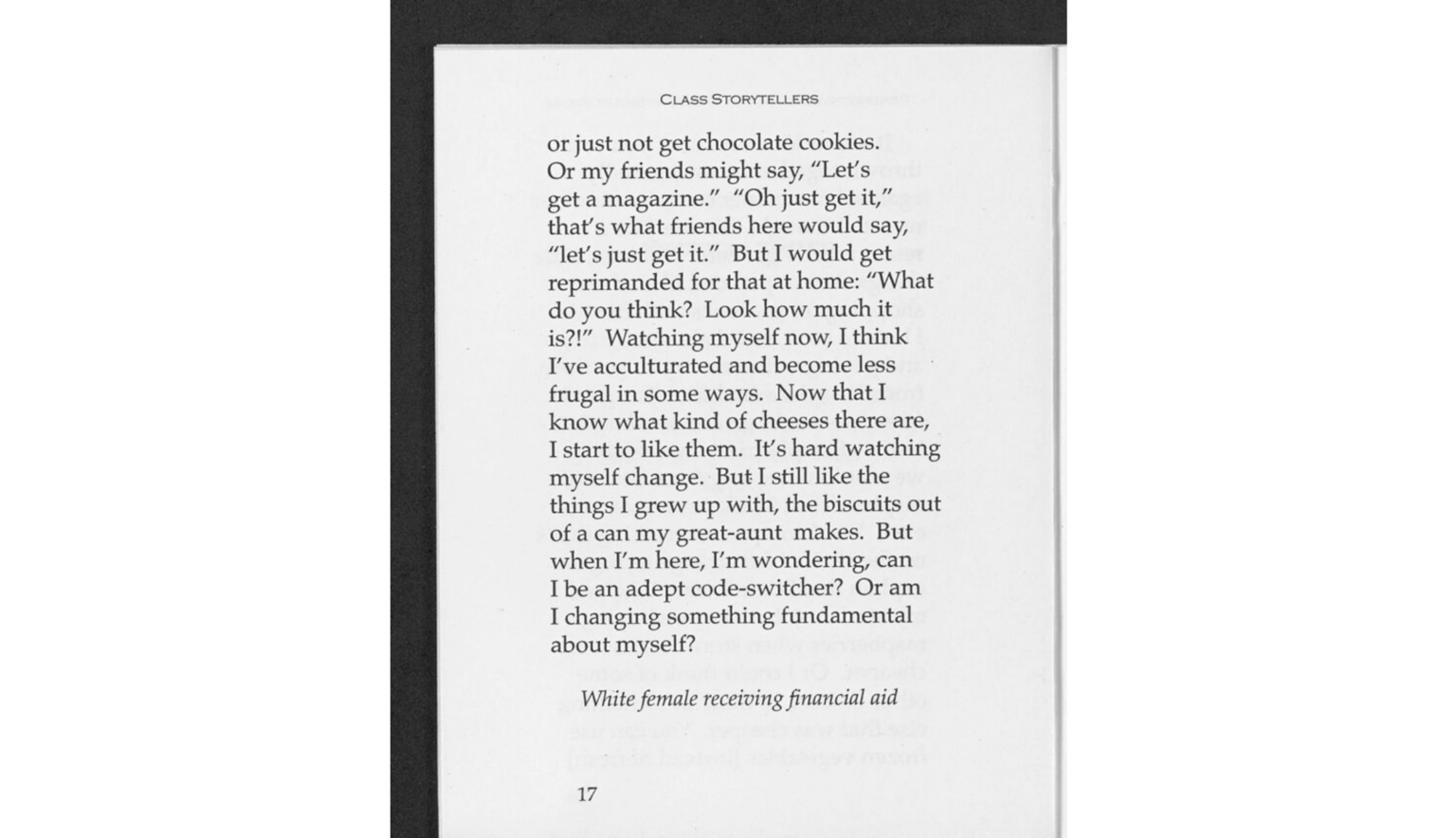
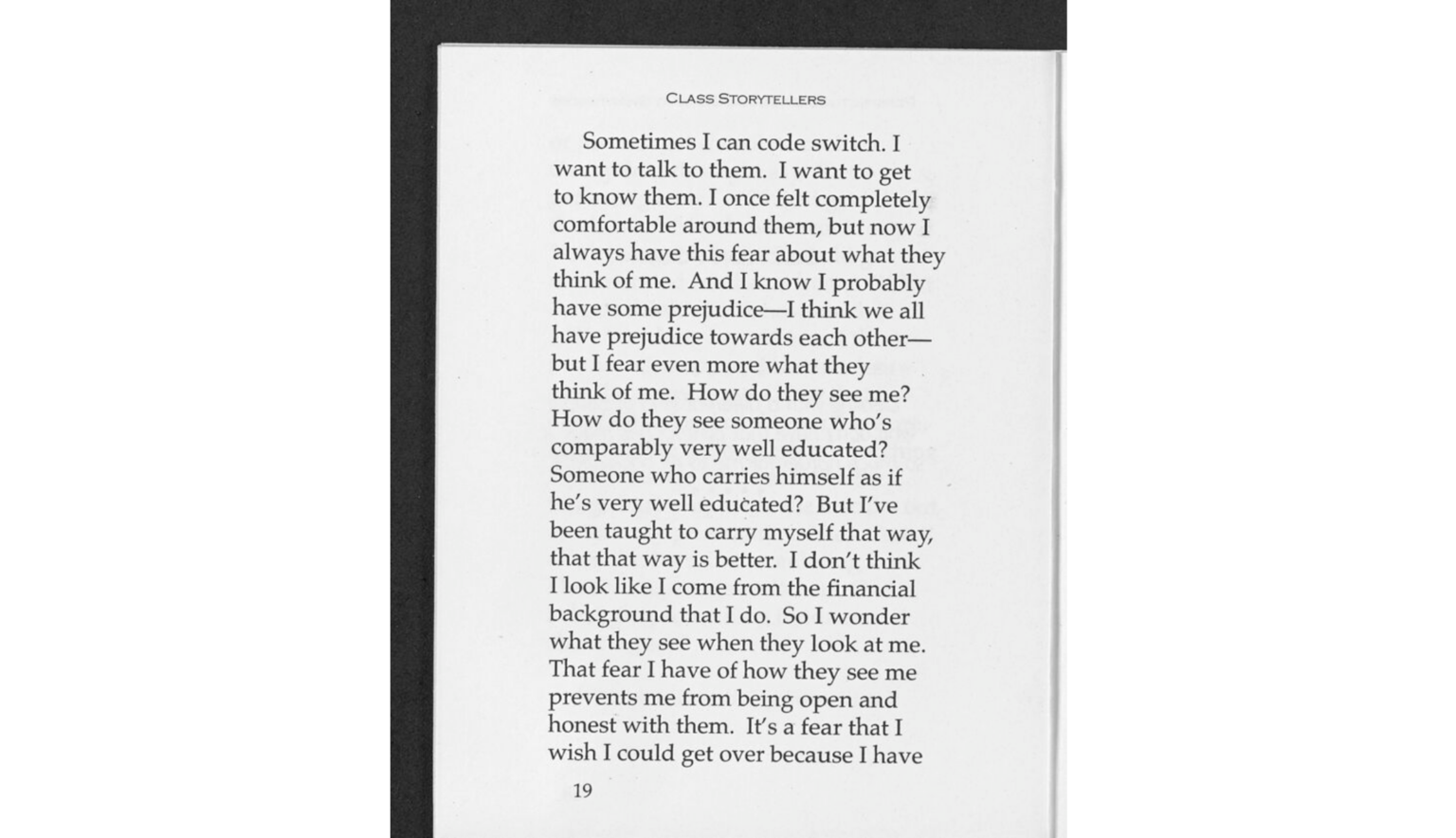
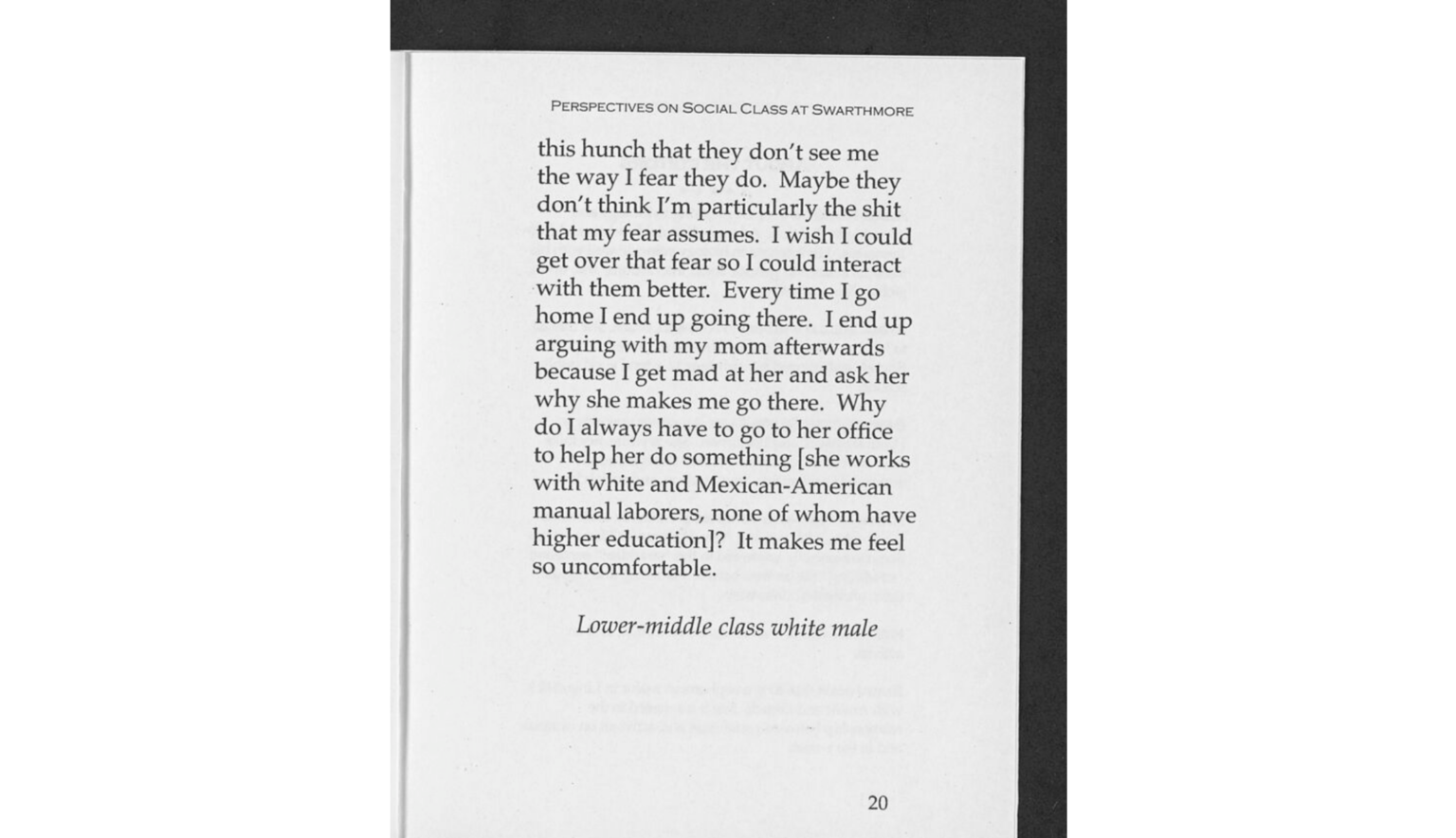
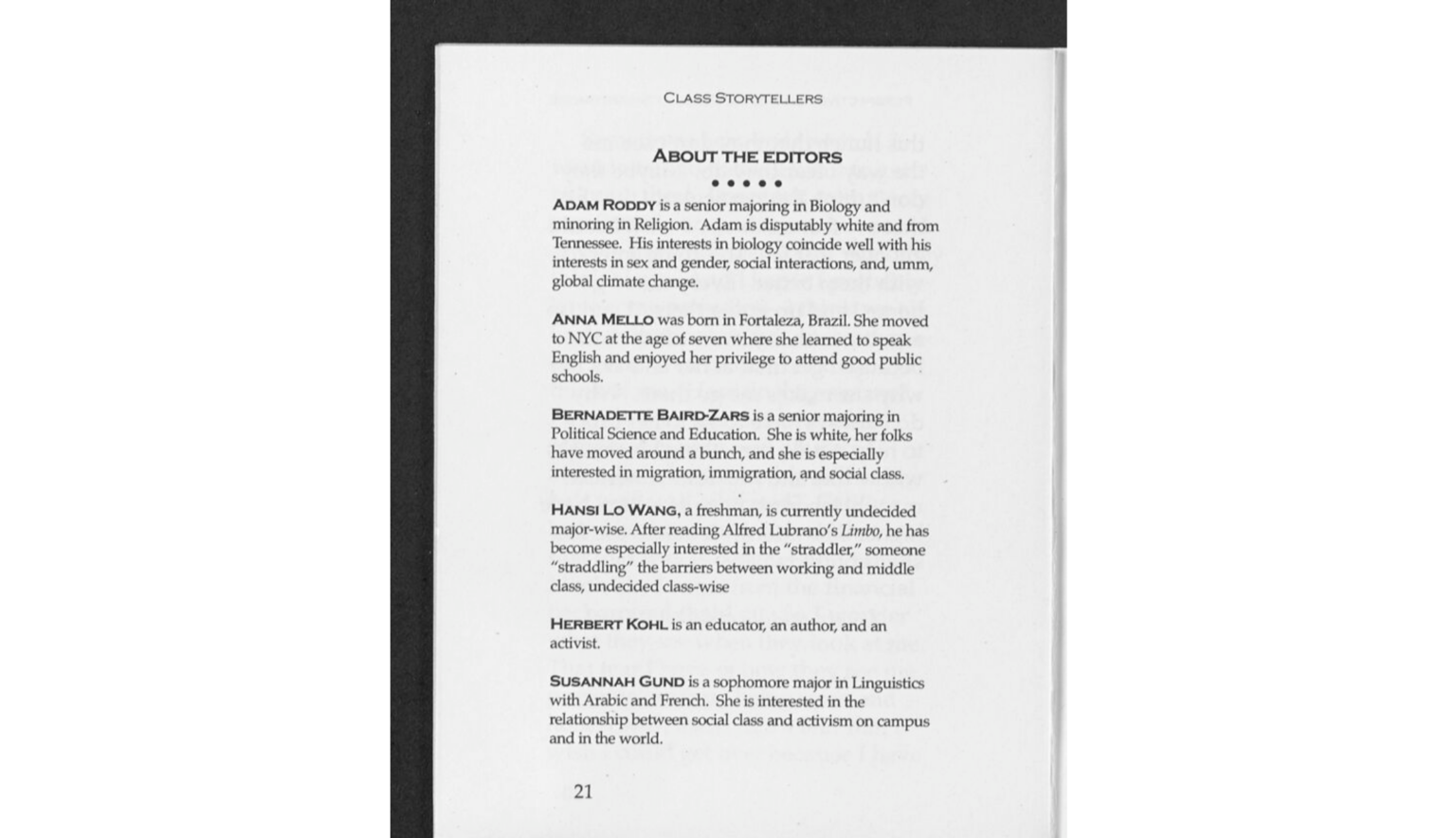
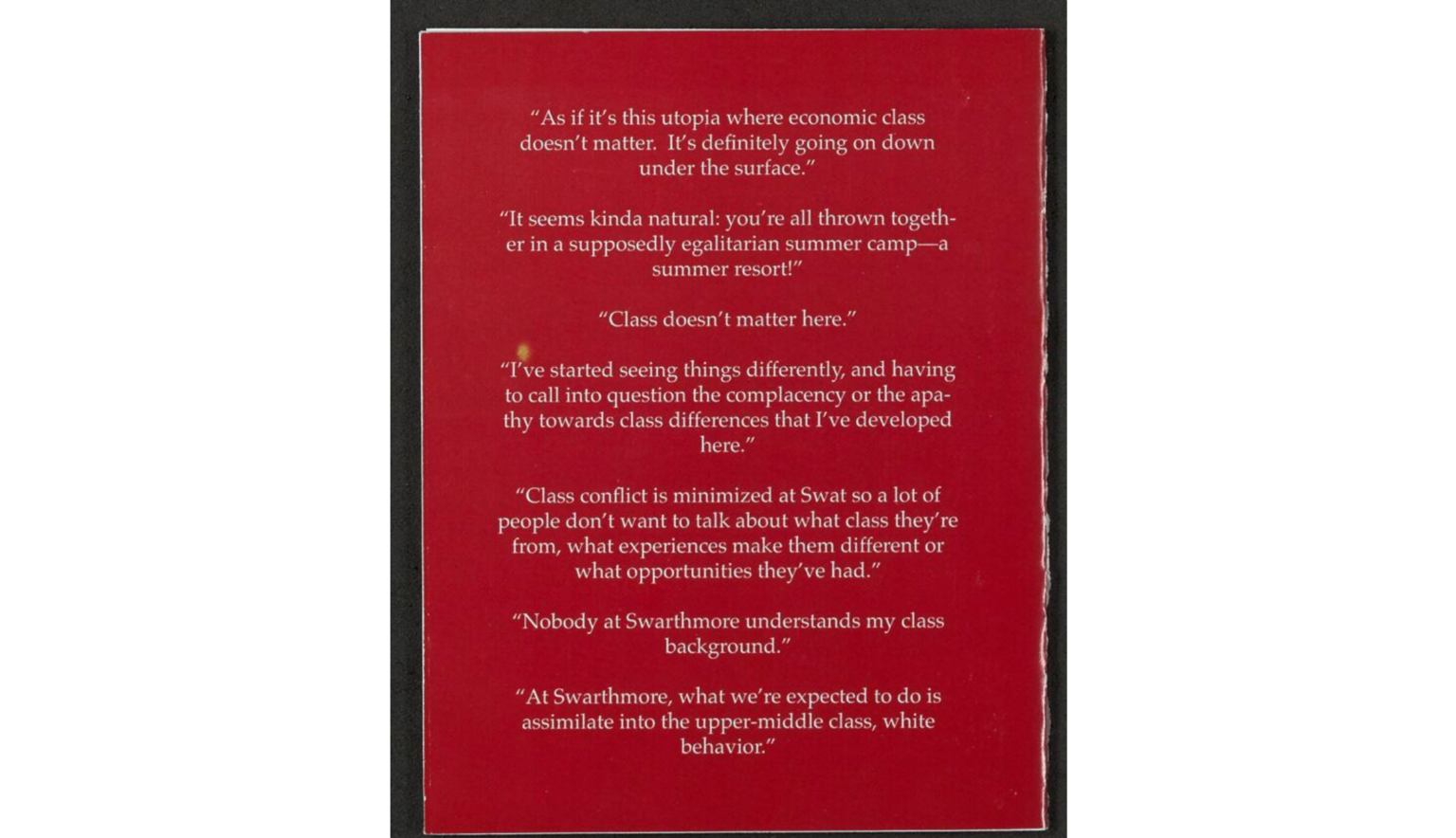
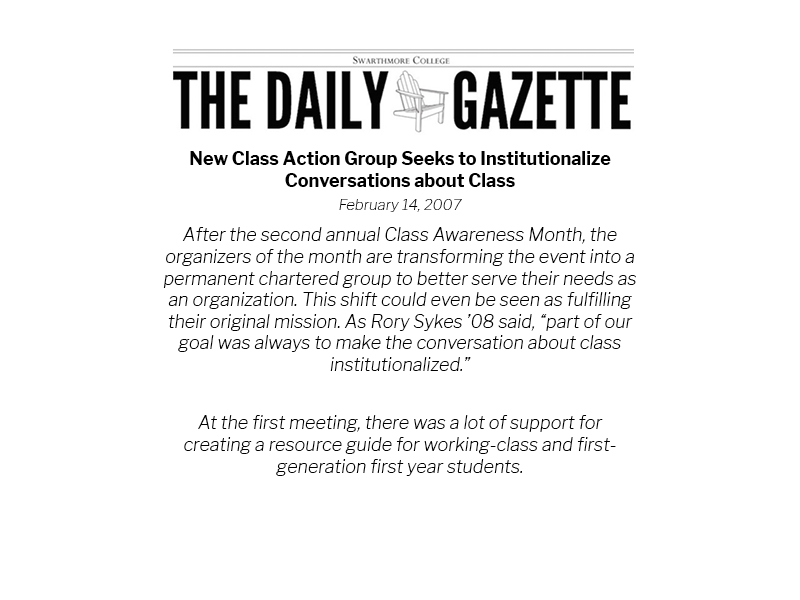
In the 2005-2006 school year, a group of students organized the first annual Class Awareness Month (CAM). To memorialize the events and stories shared during this series, a pamphlet titled “Perspectives on Social Class at Swarthmore” was created.